God's declaration of Truth

GOD HAS SHOWN MERCY. FOR THOSE WHO REJECT THAT, THERE IS ONLY THE JUSTICE AND VENGEANCE OF GOD WHICH IS ETERNAL DAMNATION.

Luke Chapter 19

The words of Our Only Lord and Saviour Jesus Christ in red.

19:10 "For the Son of man is come to seek and to save that which was lost."
19:11 As they were hearing these things, he added and spoke a parable, because he was nigh to Jerusalem and because they thought that the kingdom of God should immediately be manifested.
19:12 He said therefore: "a certain nobleman went into a far country, to receive for himself a kingdom and to return.
19:13 And calling his ten servants, he gave them ten pounds and said to them: Trade till I come.
19:14 But his citizens hated him and they sent an delegation after him, saying: 'We will not have this man to reign over us.'
19:15 And it came to pass that he returned, having received the kingdom: and he commanded his servants to be called, to whom he had given the money, that he might know how much every man had gained by trading,
19:16 And the first came saying: 'Lord, thy pound hath gained ten pounds.'
19:17 And he said to him: 'Well done, thou good servant, because thou hast been faithful in a little, thou shalt have power over ten cities.'
19:18 And the second came, saying: 'Lord, thy pound hath gained five pounds.'
19:19 And he said to him: 'Be thou also over five cities.'
19:20 And another came, saying: ' Lord, behold here is thy pound, which I have kept laid up in a napkin.
19:21 For I feared thee, because thou art an austere man: thou takest up what thou didst not lay down: and thou reapest that which thou didst not sow.'
19:22 He saith to him: 'Out of thy own mouth I judge thee, thou wicked servant. Thou knewest that I was an austere man, taking up what I laid not down and reaping that which I did not sow.
19:23 And why then didst thou not give my money into the bank, that at my coming I might have exacted it with usury?'
19:24 And he said to them that stood by: 'Take the pound away from him and give it to him that hath ten pounds.'
19:25 And they said to him: 'Lord, he hath ten pounds.'
19:26 But I say to you that to every one that hath shall be given, and he shall abound: and from him that hath not, even that which he hath shall be taken from him.
19:27 But as for those my enemies, who would not have me reign over them, bring them hither and slay them in my presence."
19:28 And having said these things, he went before, going up to Jerusalem.
19:29 And it came to pass, when he was come nigh to Bethphage and Bethania, unto the mount called Olivet, he sent two of his disciples,
19:30 Saying: "Go into the town which is over against you, at your entering into which you shall find the colt of an ass tied, on which no man ever hath sitten: loose it and bring it.
19:31 And if any man shall ask you: 'Why are you loosing it?' You shall say thus unto him: Because the Lord hath need of it.' "
19:32 And they that were sent went their way and found the colt standing, as he said unto them.
19:33 And as they were loosing the colt, the owners thereof said to them: "Why are you loosing it?
19:34 But they said: "Because the Lord has need of it."
19:35 And they brought it to Jesus. And casting their cloaks over the colt, they set Jesus on it.
19:36 And as he went, they spread their cloaks upon the road.
19:37 And when he was drawing near, being now at the descent of the Mount of Olives, the whole company of his disciples began to rejoice and to praise God with a loud voice, for all the miracles that they had seen,
19:38 Saying: "Blessed is he who comes as king, in the name of the Lord! Peace in heaven and glory in the highest!"
19:39 And some of the Pharisees, from the crowds, said to him: "Master, rebuke thy disciples."
19:40 He said to them: "I tell you that if these keep silence, the stones will cry out."
19:41 And when he drew near, seeing the city, he wept over it, saying:
19:42 "If thou also hadst known, and that in this thy day, the things that are to thy peace: but now they are hidden from thy eyes.
19:43 For the days shall come upon thee: and thy enemies shall cast a trench about thee and compass thee round and straiten thee on every side,
19:44 And beat thee flat to the ground, and thy children who are in thee. And they shall not leave in thee a stone upon a stone: because thou hast not known the time of thy visitation."
19:45 And entering into the temple, he began to cast out them that sold therein and them that bought.
19:46 Saying to them: "It is written: My house is the house of prayer. But you have made it a den of thieves."
19:47 And he was teaching daily in the temple. And the chief priests and the scribes and the rulers of the people sought to destroy him.
19:48 And they found not what to do to him: for all the people were very attentive to hear him.

The Second Epistle of St. Paul to the Thessalonians

The day of the Lord is not to come till the man of sin be revealed. The apostle's teachings are to be observed.

2:1 And we beseech you, brethren, by the coming of our Lord Jesus Christ and of our gathering together unto him:
2:2 That you be not easily moved from your sense nor be terrified, neither by spirit nor by word nor by epistle. as sent from us, as if the day of the Lord were at hand.

Chap. 2. Ver. 2. Spirit . . . utterance. . . letter indicate three possible sources of their belief that the parousia is imminent. Spirit refers to some falsely claimed revelation, utterance may be a statement of Paul’s which was misunderstood, or wrongly attributed to him, the letter seems to be one forged in Paul’s name.

2:3 Let no man deceive you by any means: for unless there come a revolt first, and the man of sin be revealed, the son of perdition

Ver. 3. . . The parousia must be preceded by a great apostasy, i.e., a great religious revolt, and the advent of the man of sin, i.e., Antichrist. Son of perdition, one entirely deserving of eternal punishment.

Ver. 3. The day of the Lord will not come. These words have been inserted to complete the sentence, which in the original is elliptical. The expanded reads "Let no man deceive you by any means: for the day of the Lord will not come unless there come a revolt first, and the man of sin be revealed, the son of perdition"

2:4 Who opposeth and is lifted up above all that is called God or that is worshipped, so that he sitteth in the temple of God, shewing himself as if he were God.

Ver. 4. In the temple, that of Apostate Jerusalem which the full consensus of the Church Fathers declare he will rebuild - i.e. the Temple of Remphan; and in the Apostate shell of the former Christian church, which he perverts to his own worship: as the Freemasons have done to the Vatican.

Ver. 4. Antichrist will be characterized by great impiety and pride. He sits in the temple of God, etc. He will aspire to be treated as God and proclaim that he is really God.

2:5 Remember you not that, when I was yet with you, I told you these things?
2:6 And now you know what restrains him, that he may be revealed in his proper time.

Ver. 6. What restrains him. The Thessalonians knew the obstacle. We also know that it is Jesus Christ.

2:7 For the mystery of iniquity is already at work: only that he who is at present restraining it, does still restrain, until he is gotten out of the way.

Ver. 7. Mystery of iniquity, the evil power of Satan’s threefold prevarication and total Apostasy from God, of which Antichrist is to be the public exponent and champion. He who is at present restraining it. The obstacle is now spoken of as a person. Some point out that Michael the archangel and his heavenly army are obstacles, and this is true, which now prevent the appearance of Antichrist – but the primary obstacle is, as St. Justin Martyr teaches: Jesus Christ Himself; when the great Apostasy is complete, then in effect, Christ is “gotten out of the way.”

2:8 And then that wicked one shall be revealed: whom the Lord Jesus shall kill with the spirit of his mouth and shall destroy with the brightness of his coming: him

Ver. 8. When Christ appears in glory, He will inflict defeat and death on Antichrist by a mere word of command.
2:9 Whose coming is according to the working of Satan, in all power and signs and lying wonders:

Ver. 9 – 10. By the aid of Satan Antichrist will perform prodigies which men will falsely regard as miracles, and by means of which they will be led to adopt sinful practices.

2:10 And with all wicked deception to those who are perishing. For they have not received the love of truth that they might be saved.
2:11 Therefore God shall send them the operation of error, to believe lying:

Ver. 11. God shall send. . .That is God shall suffer them to be deceived by lying wonders, and false miracles, in punishment of their not entertaining the love of truth.
Ver. 11. 'God sends.' God will allow their willful rejection of truth to have its natural results of spiritual blindness, impenitence and damnation. A misleading influence, or, “a delusion.” The operation of error - the Greek reads: "energian planes" or literally the energy of delusion, which is exactly and actually the fallen spirits of the devils and demons conjured by pagan religion, especially by idolatry. NOW, currently, the Assisi delusion of the Apostates, Ratzinger and Wojtyla and many others present with them, is a very real and prime example. To give oneself over to this is to invite utter and complete damnation of oneself by God.
2:12 That all may be judged who have not believed the truth but have consented to iniquity.

2:13 But we ought to give thanks to God always for you, brethren, beloved of God, for that God hath chosen you firstfruits unto salvation, in sanctification of the spirit and faith of the truth:
Ver. 13. First-fruits, i.e., earliest believers in the gospel. Some manuscripts read: “from the beginning.” That is, God called them from all eternity.
2:14 Whereunto also he hath called you by our gospel, unto the purchasing of the glory of our Lord Jesus Christ.

2:15 Therefore, brethren, stand fast: and hold the teachings, which you have learned, whether by word or by our epistle.
Ver. 15. Teachings, i.e., his teachings whether given orally or in writing. Concerning Apostolic teaching – the oral is included in the written at the point we have the whole New Testament complete, i.e. with the completion of St. John’s Gospel.
2:16 Now our Lord Jesus Christ himself, and God and our Father, who hath loved us and hath given us everlasting consolation and good hope in grace,

2:17 Exhort your hearts and confirm you in every good work and word.

St. Irenaeus

St. Irenaeus
St. Irenaeus Against Heresies and the warning against the Antichrist - click on picture

Blog List

A few words

The articles posted in the main here are from a variety of sources and perspectives, but all based on the unchangeable truth that all law comes from God, or if it is something that pretends a legalism but does not agree with God's law, then it is nothing lawful at all; the Noachide nonsense is the prime example of that which is not at all lawful. See the right side pane and below the posts at the bottom of the page for a number of sources that help shed light on this. All copyrighted sources are quoted and used for comment and education in accord with the nonprofit provisions of: Title 17 U.S.C., Section 107.

By Command of God

Eucharist in house churches Commanded by God - HE COMMANDS TO NOT HAVE ANYTHING TO DO WITH THE VATICAN WHICH HAS ALREADY BECOME TOTALLY APOSTATE AND DIABOLIC AT THIS POINT.

GO HERE: Traditional Catholic Prayers: Eucharist in house churches Commanded by God. To rise above the concerns of the world to the service of God.


Traditional Catholic Prayers: Office of the Hours for the Week


Go Here: The Return of Christ

And here:
Parousia of Jesus Christ Our Lord

The Promise of His coming. His commands to prepare and be worthy.

Statement of what is happening in the world in connection with the Second Coming of Our Lord and Saviour Jesus Christ.

Nuzul i Isa and Qiyamah, the Parousia of Jesus Christ Our Lord and His judgement of all men that have ever lived.

Rv:22:7 Behold I come quickly. Blessed is he that keepeth the words of the prophecy of this book.
Showing posts with label Zetas and Sinaloa cartels. Show all posts

Friday, August 10, 2012

A Look At Mexico's Drug Cartels : NPR

A Look At Mexico's Drug Cartels : NPR

A Look At Mexico's Drug Cartels

by Corey Flintoff


Mexican cartels have now displaced Colombian groups as the dominant cocaine traffickers in the world. Several drug cartels in Mexico have a part in the process and often war over territory.

April 16, 2009

The most urgent issue on the common agenda of President Obama and Mexican President Felipe Calderon in their meeting Thursday: curbing Mexico's vicious drug war.

A collection of drug cartels has carved up territory throughout Mexico and waged war on each other and the Mexican government. The violence has spilled across the border into the United States.

More than 10,000 people have been killed in Mexico in drug-related violence since Calderon deployed the army against the cartels in late 2006.

Before he left for Thursday's visit to Mexico, Obama struck a blow against three of the drug cartels that are battling the Mexican government. The president authorized federal officials to seize any assets the cartels may have stashed in the United States. His order also cracks down on Americans who help the gangs smuggle drugs, launder money or obtain high-powered weapons.

Here's a look at the cartels named to the kingpin list:

Sinaloa — also known as the Pacific Cartel, the Federation and the Golden Triangle.
It operates primarily out of the western Mexican states of Baja California, Sinaloa, Durango, Sonora and Chihuahua.

U.S. drug enforcement officials say the organization moves Colombian cocaine and Mexico marijuana into the U.S. and distributes it through gangs in Arizona, California, Texas, Chicago and New York City. It also operates labs to produce methamphetamines, and it ships heroin from Southeast Asian into the United States.
One of the cartel's leaders, Joaquin Guzman Loera, escaped from a maximum-security prison in 2001 and has not been recaptured. Known as "El Chapo," ("Shorty"), Guzman ranked 701st this year on Forbes magazine's list of the world's richest people. His fortune is estimated at around $1 billion. He is allied with Ismael Zambada Garcia, and U.S. drug enforcement officials consider the two to be Mexico's top drug kingpins.

Los Zetas — a paramilitary group that acts as enforcers for the Gulf Cartel, the organization of drug gangs that controls narcotrafficking on Mexico's east coast. Many of the Zetas are former Mexican soldiers who were trained to combat drug gangsters. Some of the gunmen are thought to have received training in the United States at the military School of the Americas.

The Zetas' leader is believed to be a former Mexican special forces soldier named Heriberto Lazcano, known as "El Lazca." He is wanted in the United States and Mexico for multiple murders and drug trafficking. A founding member, Jaime Gonzalez Duran, also known as "The Hummer," was arrested last year.
The Zetas were among the first criminal groups in Mexico to employ military tactics and heavy weapons, including 50 caliber machine guns, grenade launchers and even ground-to-air missiles.

In addition to fighting the Mexican government, the Zetas also fight with the Gulf and Tijuana cartels against the Sinaloa group.

La Familia Michoachana — a cartel formed in the west-central Mexican state of Michoachan, which has sometimes portrayed itself as a revolutionary or vigilante organization aimed at fighting against drugs.
In September 2006, masked gunmen threw five severed human heads onto the dance floor of a nightclub in the town of Uruapan. They left a message saying that the killings were the work of "the family."

Michoachan was a battlefield in the turf war between the Sinaloa and Gulf cartels, and the local gang is believed to have sided with the Sinaloa-led alliance known as the Federation.

The alleged leader of the Michoachan family was Alberto Espinoza Barron, known as "La Fresa" ("the Strawberry"). He was arrested late last year by the Mexican army. Mexican authorities say he was responsible for a grenade attack in the capital of Michoachan that killed eight people and wounded more than 100.

____________________________________________________________


Related - see:

The Justice of God: Brutal Mexican Drug Cartel Began as Special Unit Trained by the U.S. to Fight the Zapatistas & How Mexico's Guerrilla Army Stayed Clear of Organized Crime

Brutal Mexican Drug Cartel Began as Special Unit Trained by the U.S. to Fight the Zapatistas & How Mexico's Guerrilla Army Stayed Clear of Organized Crime

Here is the key between Fast and Furious and the Transnational Drug Crime Cartel and the Mexican Military, it began with the total shock at and distrust of the Mexican government caused by the Tlatelolco Massacre. United States covert intervention has only increasingly made everything worse, as did the reduction of the Mexican working people to virtual slaves by the implementation of NAFTA.

When all the facts are assembled, then - Terrorist Banking, OFFSHORE MONEY LAUNDERING, CARROLL FOUNDATION TRUST CASE, Fast And Furious - are all threaded through and through all of this beginning with the CIA, known as La Compania (the Company), many decades ago at the same time as their ODESSA Nazi surreptitious insertion (Ratlines) into Latin America, of their destabilizing everything there they could with the help and direction of the Bush Crime Cartel (2 articles). Also see: Bush Crime Cartel (2 articles). And see: Follow the Gold (2 articles).

See these Labels:

CARROLL FOUNDATION TRUST CASE

CIA

CIA and Pentagon

Fast And Furious

FastAndFurious

HSBC

Mexican Military

OFFSHORE MONEY LAUNDERING

TLATELOLCO MASSACRE

Transnational Drug Crime Cartel


Wednesday, August 1, 2012

Brutal Mexican Drug Cartel Began as Special Unit Trained by the U.S. to Fight the Zapatistas & How Mexico's Guerrilla Army Stayed Clear of Organized Crime

Here is the key between Fast and Furious and the Transnational Drug Crime Cartel and the Mexican Military, it began with the total shock at and distrust of the Mexican government caused by the Tlatelolco Massacre. United States covert intervention has only increasingly made everything worse, as did the reduction of the Mexican working people to virtual slaves by the implementation of NAFTA.

When all the facts are assembled, then - Terrorist Banking, OFFSHORE MONEY LAUNDERING, CARROLL FOUNDATION TRUST CASE, Fast And Furious - are all threaded through and through all of this beginning with the CIA, known as La Compania (the Company), many decades ago at the same time as their ODESSA Nazi surreptitious insertion (Ratlines) into Latin America, of their destabilizing everything there they could with the help and direction of the Bush Crime Cartel (2 articles). Also see: Bush Crime Cartel (2 articles). And see: Follow the Gold (2 articles).

See these Labels:

CARROLL FOUNDATION TRUST CASE

CIA

CIA and Pentagon

Fast And Furious

FastAndFurious

HSBC

Mexican Military

OFFSHORE MONEY LAUNDERING

TLATELOLCO MASSACRE

Transnational Drug Crime Cartel

Zetas and Sinaloa cartels


Brutal Mexican Drug Cartel Began as Special Unit Trained by the U.S. to Fight the Zapatistas - Infoshop News
Welcome to Infoshop News
Monday, July 23 2012 @ 05:03 AM UTC

Brutal Mexican Drug Cartel Began as Special Unit Trained by the U.S. to Fight the Zapatistas


It was a brutal massacre even by the gruesome standards of Mexico’s drug war: 72 migrant workers gunned down by the "Zetas" - arguably the country's most violent cartel - and left rotting in a pile outside a ranch in Tamaulipas state near the US border in late August. The Zetas have a fearsome reputation, but the real surprise comes not in their ruthless use of violence, but in the origins of where they learned the tricks of their bloody trade. Some of the cartel's initial members were elite Mexican troops, trained in the early 1990s by America’s 7th Special Forces Group or "snake eaters" at Ft. Bragg, North Carolina, a former US special operations commander has told Al Jazeera.

It was a brutal massacre even by the gruesome standards of Mexico’s drug war: 72 migrant workers gunned down by the "Zetas" - arguably the country's most violent cartel - and left rotting in a pile outside a ranch in Tamaulipas state near the US border in late August.

The Zetas have a fearsome reputation, but the real surprise comes not in their ruthless use of violence, but in the origins of where they learned the tricks of their bloody trade.

Some of the cartel's initial members were elite Mexican troops, trained in the early 1990s by America’s 7th Special Forces Group or "snake eaters" at Ft. Bragg, North Carolina, a former US special operations commander has told Al Jazeera.

“They were given map reading courses, communications, standard special forces training, light to heavy weapons, machine guns and automatic weapons,” says Craig Deare, the former special forces commander who is now a professor at the US National Defence University.

"I had some visibility on what was happening, because this [issue] was related to things I was doing in the Pentagon in the 1990s," Deare, who also served as country director in the office of the US Secretary of Defence, says.

The Mexican personnel who received US training and later formed the Zetas came from the Airmobile Special Forces Group (GAFE), which is considered an elite division of the Mexican military.

Their US training was designed to prepare them for counter-insurgency and, ironically, counter-narcotics operations, although Deare says they were not taught the most advanced commando techniques available at Ft. Bragg.

Military forces from around the world train at Ft. Bragg, so there is nothing unique about Mexican operatives learning counter-insurgency tactics at the facility. However, critics say the specific skills learned by the Zetas primed them for careers as contract killers and drug dealers.

“The Zetas definitely have the reputation of being the most dangerous, the most vicious, the most renegade of the cartels,” says Kristen Bricker, a Mexico-based research associate with the North American Congress on Latin America (NACLA).

About 29,000 people have died since Felipe Calderon, Mexico’s president, declared war on the drug cartels in 2006.

Extreme violence

The group has mounted the severed heads of its victims on pikes in urban areas, posted torture and execution videos on the internet, forced poor migrants into prostitution and massacred college students during house parties.

"Other cartels have accused them of not following the 'gentlemen's code' of drug trafficking and causing undue violence," Bricker told Al Jazeera.

"At one time, it was considered bad form to kill pregnant women, but not any more." For safety concerns, Bricker didn’t want to say where she lives in Mexico.

Deare estimates "probably more than 500" GAFE personnel received special forces training. He is unsure exactly how long the programme lasted. The Zetas came to the attention of Mexico’s Attorney General’s office in 1999.

After US training, GAFE operatives defected from the Mexican military to become hired guns, providing security to the Gulf cartel, a well established trafficking organisation, according to Laura Carlsen, director of the Americas program of the International Relations Center.

"They split from the Gulf cartel and formed as a cartel in their own right," Carlsen, based in Mexico City, told Al Jazeera.

The Zetas' alleged current leaders, Heriberto Lazcano, known as Z-3 and Miguel Trevino, or Z-40, were first recruited by Osiel Cardenas, the now-jailed leader of the Gulf cartel. The name "Zetas" originates from the radio code "Z" used by top military commanders in Mexico.

But unlike Zorro, the Mexican outlaw hero who also used the "Z" alias, Los Zetas steal from everyone, not just the rich. And they certainly don’t give much back to the poor, except the corpses of their relatives. "They are just known for being a different kind of human being," says Bricker.

Frequent defections

The number of initial defectors from GAFE is thought to be somewhere between 30 and 200, but "the exact number is unclear", says Deare. However, the possibility of defections should not have come as a surprise to US trainers.

The Mexican state "does not pay soldiers enough" Deare says. "I am not saying they [the government] have to pay as much as the cartels, but they [security forces] must be paid decently if they aren’t going to be susceptible to corruption."

The GAFE’s desertion rate of an estimated 25 per cent is high, even by the low standards of Mexico’s security forces. Between 2000 and 2005 more than 1,300 of the elite troops defected, La Journada newspaper reported.
The Zetas decided forming their own cartel was more profitable than working for the military or even other drug gangs [Reuters]

"The US really needs to examine their vetting procedures and manuals to see why so many people who they train do so many terrible things when they go back home," Bricker said.

But just blaming Uncle Sam for the rise of the Zetas and increasing drug violence is too simplistic, says Bricker.

"It wasn't just US training. The GAFE were also trained by the Kaibiles of Guatemala, a notoriously brutal special operations force from that country’s dirty war in the 1980s," said Bricker.

And even without special training for cartels, there is little trust that Mexican security forces can deal with the drug trade.

In May 2006, "La Barbie" a leader of the rival Sinaloa cartel, took out a full page advert in a Mexico City daily newspaper, to allege that Mexican police were protecting the Zetas.

For their part, the Zetas have long complained that the Sinaloa cartel enjoys police protection.

Despite debacles surrounding the Zetas and increasing violence, Deare - who physically resembles the tough but fair minded under-secretary of defence played by Harrison Ford in the fictional drug war thriller Patriot Games - thinks Mexico needs more, not less, US involvement.

America has pledged some $1.3bn to assist Mexico in the drug war through the 2007 Merida initiative, but much of that cash hasn’t been spent because it has been stalled in Congress, Deare says.

Alterior motives

Other analysts are critical of the initiative because it allows the US to "meddle" in Mexico’s affairs and has not garnered the desired results.

"For citizens here, Merida causes two great concerns: it raises questions of national sovereignty and there is a lot of fear that under the cover of the drug war there will be increasing attacks on grassroots movements," says Carlsen.

GAFE, for example, was established in 1994 to fight Zapatista rebels in southern Mexico, La Journada reported.

The Zapatistas, a poorly armed primarily indigenous militia, rose up against the Mexican government on January 1, 1994, the same day the North American Free Trade Agreement (NAFTA) came into effect between the US, Canada and Mexico.

The Zapatistas called NAFTA a "death sentence", in part, because the agreement would allow subsidised US crops to enter the Mexican market, pushing small farmers off the land.

After battling the insurgency, GAFE gained additional training and support from the US to fight the drug trade, a business which arguably benefited more than any other from NAFTA. Relaxed borders increased trade flows in many goods, illegal drugs in particular, and rural displacement swelled the ranks of unemployed young men eager to make quick cash by any means necessary.

Valued between $19bn and $40bn dollars on a yearly basis – exact figures aren’t available for obvious reasons- the drug trade has massive power as a corrupting influence.

And despite 50,000 Mexican troops fighting the cartels, despite the mangled bodies and US assurances of support, Bricker speaks for all three analysts from divergent political outlooks when she states: "No one has been able to present any evidence that the Mexican government is winning this war."

And, if winning the war on drugs is the goal, training the most violent cartel probably isn't a great start.

This is the first in a two part series examining the issues behind Mexico's drug violence. Follow Chris Arsenault On Twitter: @AJEchris

http://english.aljazeera.net/indepth/...09775.html


______________________________________________________________


How Mexico's Guerrilla Army Stayed Clear of Organized Crime

Monday, 09 January 2012 12:41

How Mexico's Guerrilla Army Stayed Clear of Organized Crime

Written by  Geoffrey Ramsey
    How Mexico's Guerrilla Army Stayed Clear of Organized Crime
    Mexico's Zapatista Army of National Liberation (EZLN) is distinct from most other rebels organizations in Latin America, having remained within a democratic framework without getting involved in organized crime to secure funding.
    Because of its status as a major theater for proxy conflicts during the Cold War, Latin America has a long history of leftist insurgencies. Over the past two decades, however, these left wing groups largely abandoned armed struggle as a means of gaining power, turning instead to peaceful electoral politics. In some countries they have been immensely successful. Indeed, the current ruling parties of Nicaragua, El Salvador, Brazil and Uruguay can all trace their roots -- at least in part -- back to guerrilla insurgencies of the 1970s and 80s.
    Nevertheless, a handful of guerrilla movements persist in the region. The most well-known examples are in Colombia, which is home to the Revolutionary Armed Forces of Colombia and (FARC) and the National Army of Liberation (ELN). In Peru, two factions of the Shining Path still carry out deadly attacks on security forces, though the group is not the threat that it was at its peak in the early 1990s.
    These three are generally cited as the most relevant insurgent groups in Latin America, and they have worked hard to maintain this status. All three have adopted illicit means of obtaining funding, including drug trafficking, bank robbery, kidnapping and extortion.
    In this context, the high profile of Mexico’s largely indigenous Zapatista Army of National Liberation is incongruous. Although much of the organization’s social and political work is supported by international and domestic NGOs, the full nature of its funding is unclear. What is clear is that despite rising up in arms against in the southern state of Chiapas in 1994 and having since declared sizable parts of southern Mexico autonomous from the government, the EZLN has largely managed to refrain from criminal activity to support itself.
    When criminal allegations have been leveled against them, such as when the group was suspected of carrying out the kidnapping of Mexican politician Diego Fernandez de Cevallos last year, the Zapatistas havevehemently denied them, and a congressional commission even acknowledged that the kidnapping didn’t fit the Zapatistas’ profile.
    Their eschewal of crime is due largely to the fact that the EZLN is not a traditional guerrilla army. After their initial uprising in 1994, and the resulting San Andres peace accords in 1996, the group has largely refrained from illegal activity. Instead, they have become more of a grassroots social movement, establishing EZLN-affiliated autonomous communities in Chiapas and attempting to link far left community organizations throughout the country under the banner of a nationwide movement called the "Other Campaign."
    Indeed, the Zapatista’s most public spokesperson, alias “Subcomandante Marcos,” has actively denounced armed groups which have attempted to ally themselves with the EZLN. Through well-publicized letters and communiques, he has castigated groups like the FARC and Spain’s ETA for killing civilians. Marcos has voiced aversion to armed struggle inside Mexico’s borders as well, distancing the EZLN from the small, Guerrero-based People’s Revolutionary Army (EPR), which is known for carrying out attacks on security forces and bombings of infrastructure targets in southern Mexico.
    The fact that the EZLN refrains from armed and criminal activity likely has as much to do with self-preservation as it does with the group’s ideology. Since the 1994 uprising, the Mexican government has drastically increased its military presence in Chiapas. According to a 2004 study by the Center for Political Analysis and Social and Economic Research (CAPISE), there are at least 91 military bases in the state, many of which are located near Zapatista communities.
    In more recent years, the military presence has increased even more in response to President Felipe Calderon’s crackdown on drug trafficking organizations. The Sinaloa Cartel and Zetas are deepening their activities in neighboring Guatemala, a trend which Mexico is fighting by increasing the number of military checkpoints along the southern border (with mixed success).
    Considering the high level of militarization of armed forces in the Zapatistas’ main area of influence, their cessation of military activity is not surprising. If they were to attempt another uprising, it would doubtlessly end in a devastating defeat.
    The disincentive for the EZLN to mix itself up in criminal activity is just as strong. The Calderon administration’s security strategy has given the government a powerful policy narrative to justify dismantling drug traffickers’ community control. If provoked, the state could easily turn it against the Zapatistas.
    By turning away from armed struggle, the group has also been afforded a certain amount of political legitimacy. Unlike their guerrilla cousins in Colombia and Peru, the Zapatistas have widespread support both from the Mexican left and on the global stage, where they are known as a spearhead of the anti-globalization movement. It should also be noted that the Zapatistas eschew conventional politics with the same ferocity. Ever since their inception they have rejected the notion of joining the Mexican political system, which they view as hopelessly corrupt.

    Saturday, July 21, 2012

    The Mexico drug war: Bodies for billions - CNN.com

    The Mexico drug war: Bodies for billions - CNN.com


    The Mexico drug war: Bodies for billions

    By Ashley Fantz, CNN
    updated 9:03 AM EST, Fri January 20, 2012
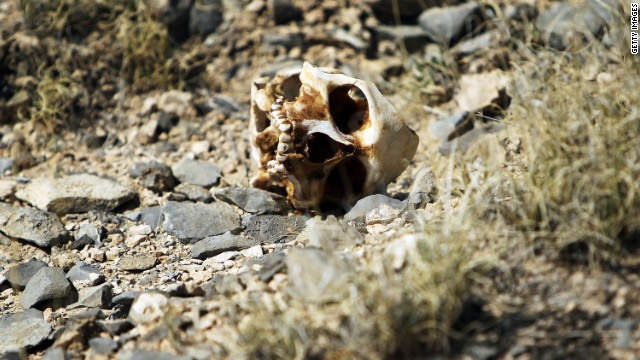
    A skull of someone thought to be a victim of drug violence lies on the ground in Ciudad Juarez in early 2010. The border city of Juarez has been racked by violent drug-related crime, making it one of the most dangerous cities in Mexico's war on drugs. According to figures released on January 11 by the Mexican government, 12,903 people were killed in drug-related violence in the first nine months of 2011.A skull of someone thought to be a victim of drug violence lies on the ground in Ciudad Juarez in early 2010. The border city of Juarez has been racked by violent drug-related crime, making it one of the most dangerous cities in Mexico's war on drugs. According to figures released on January 11 by the Mexican government, 12,903 people were killed in drug-related violence in the first nine months of 2011.
    HIDE CAPTION
    Mexico's long-running drug war
    <<
    <
    1
    2
    3
    4
    5
    6
    7
    8
    9
    10
    11
    12
    >
    >>

    STORY HIGHLIGHTS
    • Since December 2006, nearly 48,000 people have been killed in drug-related violence in Mexico
    • Mexican cartels make billions of dollars a year, much of their profits in the U.S.
    • The bloodbath could threaten the survival of the Mexican state, and American national security
    Editor's note: This article begins an occasional series looking at the violence tied to Mexican drug cartels, their expanding global connections and how they affect people's daily lives.
    (CNN) -- There are kingpins with names like the Engineer, head-chopping hit men, dirty cops and double-dealing politicians. And, of course, there are users -- millions of them.
    But the Mexican drug war, at its core, is about two numbers: 48,000 and 39 billion.
    Over the past five years, nearly 48,000 people have been killed in suspected drug-related violence in Mexico, the country's federal attorney general announced this month. In the first three quarters of 2011, almost 13,000 people died.
    Cold and incomprehensible zeros, the death toll doesn't include the more than 5,000 people who have disappeared, according to Mexico's National Human Rights Commission. It doesn't account for the tens of thousands of children orphaned by the violence.
    The guilty live on both sides of the border.
    Street gangs with cartel ties are not only in Los Angeles and Dallas, but also in many smaller cities across the United States and much farther north of the Mexican border. Mexican cartels had a presence in 230 cities in the United States in 2008, according to the U.S. Justice Department. Its 2011 report shows that presence has grown to more than 1,000 U.S. cities. While the violence has remained mostly in Mexico, authorities in Arizona, Georgia, Texas, Alabama and other states have reportedly investigated abductions and killings suspected to be tied to cartels.
    Mexican black tar heroin (so called because it's dark and sticky), is cheaper than Colombian heroin, and used to be a rarity in the United States. Now it is available in dozens of cities and small towns, experts say. Customers phone in their orders, the Los Angeles Times reports, and small-time dealers deliver the drug, almost like pizza deliverymen.
    Traffickers are recruiting in the United States, and prefer to hire young. Texas high schools say cartel members have been on their campuses. Most notoriously, a 14-year-old from San Diego became a head-chopping cartel assassin.
    "I slit their throats," he testified at his trial, held near Cuernavaca. The teenager, called "El Ponchis" - the Cloak - was found guilty of torturing and beheading and sentenced to three years in a Mexican prison.
    For more than a decade, the United States' focus has been terrorism, an exhausting battle reliant on covert operatives in societies where the rule of law has collapsed or widespread violence is the norm. The situation in Mexico is beginning to show similarities. In many border areas, the authority of the Mexican state seems either entirely absent or extremely weak. In September 2010, U.S. Secretary of State Hillary Clinton said cartel violence might be "morphing into or making common cause with what we would call an insurgency."
    If cartel violence is not contained in Mexico, which shares a nearly 2,000 mile border with the United States, the drug war could threaten U.S. national security and even survival of the Mexican state.
    How much is enough?
    For most of us, Mexico is reduced several times a week to a sickening barrage of horror flick headlines. Thirty-five bodies left on the freeway during rush-hour in a major tourist city. A person's face sewn onto a soccer ball. Bodies found stuffed in barrels of acid. Heads sent rolling onto busy nightclub dance floors.
    What could explain such savagery?
    Traffickers don't have a political or religious ideology like al Qaeda.
    The answer, some experts say, is a number. Something like $39 billion.
    That's the top estimated amount Mexican and Colombian drug trafficking organizations make in wholesale profits annually, according to a 2009 Justice Department report, the latest year for which that calculation was available. The department's 2011 reportsaid that Mexican traffickers control the flow of most of the cocaine, heroin, foreign-produced marijuana and methamphetamine in the United States.
    There are seven cartels in Mexico vying for control of smuggling routes into the United States, a bountiful sellers' paradise. South of the border it costs $2,000 to produce a kilo of cocaine from leaf to lab, the DEA said. In the U.S., a kilo's street value ranges from $34,000 to $120,000, depending on the ZIP code where it's pushed.
    "How much is enough to the cartels? How many billions justify how many deaths to them?" said DEA special agent and spokesman Jeffrey Scott. "Mexico is their home, too. Their families live there. At what point does the violence cripple their ability to conduct business?"
    Scott has been with the DEA for 16 years. Between 2006 and 2011, he led a Tucson, Arizona, strike force that fought smugglers bringing tons of methamphetamine, marijuana, heroin and cocaine across the border. By the time the drugs reach the low-level street dealer, they have been through many middle managers in the cartels' purposely confusing web of workers.
    "The people who are arrested will sometimes say, 'Sinaloa who?'" he said, referring to the cartel that originated in the Mexican Pacific Coast state and has the strongest presence in the United States.
    Dealers usually don't know or care where their product comes from, Scott said. He said he doubts the tens of millions of Americans who use illegal drugs do, either.
    Get Shorty
    From foot to head he is short/But he is the biggest of the big
    If you respect him, he'll respect you
    If you offend him, it will get worse
    -- 
    Lyrics to narcocorrido "El Chapo" by Los Canelos de Durango
    "El Chapo" (Shorty) is the boss of the Sinaloa cartel. In his last-known photo, the 5 foot 6 inch son of a poor rural family wears a schoolboy haircut and a plain-colored puff-coat. Despite having virtually no formal education, Forbes estimates Joaquin Guzman Loera is worth $1 billion. This month the U.S. Treasury declared him the most influential trafficker in the world. He has eluded capture for more than a decade, is known for coming up with original ways to smuggle, like putting cocaine in fire extinguishers, and is suspected of helping Mexicans and Colombians launder as much as $20 billion in drug profits.
    The legend of "El Chapo" began to grow when he escaped, reportedly on a laundry cart, from a Mexican prison in 2001. He seemed even more untouchable last summer when his 20-something beauty queen wife (who has dual nationality) crossed into California to give birth to twins. The birth certificates leave blank the space for the father's name, and she apparently hustled back across the border.
    It's anyone's guess where El Chapo is. Mexican President Felipe Calderon wondered last year if he was hiding out in the United States.
    Guzman is the drug war. Perpetuating the image of the bulletproof bad guy keeps it alive.
    YouTube is full of narco snuff. Those with weak stomachs should avoid the wildly popular El Blog del Narco, which posts gory photos of killings and confessions by drug lords. Cartels make their own movies, glorifying the business. The films are sold in street markets in Mexico and the United States.
    Some say it's no coincidence that the first beheadings of Mexican police officers occurred in 2006, when videotapes of al Qaeda beheadings were shown on Mexican television.
    Since then, headless corpses have become a cartel calling card. In a single week in September, a sack of heads was left near an Acapulco elementary school and a blogging reporter's headless corpse was dumped in front of a major thoroughfare in the Texas border town of Nuevo Laredo. Her head, along with headphones and computer equipment, was found in a street planter.
    A note left at the scene, one of dozens of journalist killings in the past five years, read: "OK Nuevo Laredo live on the social networks, I am La Nena de Laredo and I am here because of my reports and yours ..."
    The message was signed with several Z's, indicating the slaying was the work of another major cartel, the Zetas.
    One of the first cartels to use the internet, the Zetas are perhaps the savviest propagandists in the drug war. They're known for effective recruitment tactics.
    A few years ago, they appealed to the destitute in a nation where the minimum wage is $5 a day, but millions have no work.
    Banners were dropped from bridges in major cities.
    "Why be poor?" the signs said. "Come work for us."
    The good old bad days
    Desde que yo era chiquillo tenia fintas de cabron (Ever since I was a kid, I had the fame of a bad-ass)
    ya le pegaba al perico, y a la mota (already hitting the parrot [cocaine] and doing dope [marijuana])
    -- El Cabron, a legendary narcocorrido, or narco ballad, released in 2005.
    Feeding addiction has long been a part of Mexico's relationship with the United States, first becoming a well-oiled operation during Prohibition when Americans crossed over to drink and get high and Mexicans sent marijuana and alcohol to speakeasies in the States.
    During this era, narcocorridos, or drug pop ballads glorifying kingpins, became popular. The accordion-based anthems were danceable, fun. Today the songs are no longer so amusing.
    Between 2006 and 2008, more than a dozen performers have been murdered. Cartels have held some balladeers hostage for days, forcing them to entertain partying crews. Some state and local Mexican governments have tried to ban the music, but the effort has only made the songs sexier. They shake butts from Cancun to Culiacan, and across the United States from Los Angeles to New York. Slain narco singers have been nominated for posthumous Grammys. (Watch narco singer Valentín Elizalde's music video "A Mis Enemigos" which some speculate was an attack on the Gulf cartel and led to his murder.)
    Narcocorridos have become death impersonating art, a symbol of just how unexpectedly dark the Mexican drug business has become.
    The definition of a cartel is an agreement among competing firms. That was the old way for the Mexicans. Pay the cops and the politicians. Don't kill anyone unless absolutely necessary and don't make a mess of it.
    Two scenarios made their thieves' agreement possible.
    For decades, Mexicans mainly transported cocaine for the Colombians or the Colombians sent the cocaine directly into the United States on planes or speedboats.
    That changed in the 1990s when the United States tightened its choke on Colombia's main smuggling point in the Caribbean and Florida and worked with the Colombian government to combat cartels and eliminate kingpins like Pablo Escobar.
    The neutered Colombian cartels were then forced to rely on the Mexicans, who smuggled across much more vast and impossible to monitor areas like the border and the eastern Pacific Ocean.
    Suddenly indispensable in their industry, the cartels in Mexico reacted like any ambitious corporation. They bought out every last possible competitor, ramping up bribes across the ranks of law enforcement and politicians. They advertised themselves to struggling working class people and the poor as a panacea amid all the government's failures: Cartels were the private-sector alternative.
    Within a few years, they gained unrivaled dominance in the global illicit drug trade.
    The second scenario helping the cartels, some experts say, wasrampant corruption within the PRI, or the Institutional Revolutionary Party, which ran Mexico for 72 years.
    There were far fewer deaths and the cartels' bottom line wasn't threatened.
    The PRI lost power in 2000 with the election of Vicente Fox, who led the opposition National Action Party.
    Known for his cowboy hats, Fox made little of the cartels during his election campaign. But after meeting with American officials in the early days of his administration, he announced he wanted the traffickers gone.
    The arrests of kingpins and key players followed, which prompted chaos within cartel ranks as commands were shaken. Cartel members fought amongst themselves and each other. The good old bad days ended.

    A real war starts
    La traicion y el contrabando (The treason and the contraband)
    Son cosas incompartidas" (They are the same thing)
    - Lyrics to "Contrabando y traicion" by Tigres del Norte
    To understand the drug war, accept that it's impossible to keep track of all its players. Accept that there are no white hats or black hats. There's only grey. Fog.
    There is, however, agreement among experts about when war was declared: In late 2004 in the border town of Nuevo Laredo, 10 minutes from Laredo, Texas.
    The Sinaloa wanted this golden smuggling route.
    Every year, more than 5 million cars, 1.5 million commercial trucks and 3.8 million pedestrians cross northbound from Mexico into the United States here, bringing with them a ton of hidden narcotics.
    In 2004, Nuevo Laredo was controlled by the Gulf cartel, which was just as old and Corleone-esque as Sinaloa.
    For help defending their turf, the Gulf hired a group of former Mexican special forces soldiers who called themselves Zetas after the federal police code for high-ranking officers, "Z1."
    The Sinaloa clan hired their own protection, a gang named Los Negros led by a blond-haired, blue-eyed American from Laredo. The man's cohorts called him La Barbie.
    The Zetas battled Los Negros with tactics befitting an elite military. They fired automatic weapons, launched RPGs and grenades. They shot at each other for more than a year. Local gangs jumped in. Civilians dropped.
    Emboldened by their Nuevo Laredo victory, the Zetas formed their own cartel. As they went after other cartels throughout Mexico, the Zetas honed a reputation for sickening brutality, seeming to kill just because they can. They have been blamed for setting fire to a casino killing 52 people, shooting dead 72 migrants on a Tamaulipas farm in 2010, murdering and tossing into mass graves women and children and killing bloggers. In April 2011, the bodies of 190 people, some of them migrant workers, were found in a mass grave in the desert of Tamaulipas.
    Officials say the Zetas have lobbed grenades into celebrating crowds and blown up a pipeline that sent "rivers of fire" into residential streets. They have terrorized cities that once seemed untouchable by the violence, including the port city of Veracruz and Mexico's richest city, Monterrey, home to many international companies.
    As the Zetas enacted their terror, that blond-haired, blue-eyed American leading Los Negros got angrier. La Barbie was Edgar Valdez, a Texas high school football star who worked his way into the Mexican underworld as a pot dealer. In 2005, the Dallas Morning News reported on a video showing four bound and bloody men, suspected to be Zetas, being interrogated off camera by a man believed to be Valdez.
    A pistol comes into the frame, goes off and one of the men slumps. The video went viral. People around the globe started asking what was really going on in Mexico.
    Journalist Ioan Grillo has been to more murder scenes than he can recall. His new book, "El Narco: Inside Mexico's Criminal Insurgency,"includes interviews with hit men, gang members, government and law enforcement officials and people caught in the crossfire.
    Grillo repeatedly returns to a single idea. Wars occur because people cannot feed their families. They happen because groups of people feel unimportant, disenfranchised, angry and broke. They want a piece of life. It only takes a few people with particularly hollow morals, capable of shutting off or suppressing guilt, to convince many that killing and dying in spectacular ways is tantamount to glory.
    Jihadist groups, kamikaze squadrons, American street gangs, cartels. Their members were all kids at one point. Grillo writes that he has seen teenagers show up at murder scenes showing no grief. It has become routine. They pick up shell casings scattered on the ground and debate whether they've been fired from AK47s or M4s.
    There are very few counselors in Mexico to help, and there is very little quality education outside the circles of the comparatively privileged few, he wrote.
    Why wouldn't a kid take 50 pesos to be a lookout, or 1,000 pesos to kill someone?
    "I would love to see more money spent on these concerns," Grillo said, "than on more military helicopters and soldiers gunning it out with the cartels."
    Fighting back
    After he was elected president in 2006, the PAN's Felipe Calderon took a page out of his predecessor's playbook and declared war on the cartels. He had the Mexican military fan out across the country and fired hundreds of corrupt police officers. He even disarmed an entire town, saying that most of its police force was working for the cartels.
    Plenty of narcos were arrested, and some extradited to the United States, but many thousands of people died. They included cartel members, police and civilians who were caught in the middle of a gruesome war.
    Calderon and President George W. Bush reached an unprecedented agreement to fight the cartels. The Merida Initiative (named after the Mexican city where the two met) included a U.S. pledge of $1.5 billion between 2008 and 2010. President Obama requested millions more for 2011 for the program. The program provides aircraft, inspection tools and other sophisticated drug-detecting technology to the Mexicans. It also funds drug counseling and prison rehabilitation programs.
    To fight corruption, the United States has also pledged to give money to help train police in Mexico.
    For its part, the Mexican government has passed legislation aimed at bolstering its judicial system, and in October 2010, Calderon formally requested a total reshaping of the police force in Mexico. The reform he proposed would create unified state police forces and eliminate municipal police, who federal officials have said are very susceptible to corruption because of their low salaries.
    Observers say Calderon underestimated how many police and other law enforcement officers were on the cartels' payroll when he came to power. As of March 2008, 150,000 soldiers had deserted. Traffickers, experts say, spent the Fox administration hunkering down, ingratiating themselves to communities, buying food and paying for medical bills, offering restless young people a sense of identity and hard cash.
    And as Grillo has written, many people didn't trust the police and the soldiers as they once did. Authorities were accused of widespread human rights abuses while on anti-cartel missions. Jose Luis Soberanes, president of the Mexican Human Rights Commission, testified in 2008 that his office had received complaints that police and soldiers had entered towns to rape and torture and kill, including shooting dead two women and three children in Sinaloa state.
    The cartels had become Robin Hood to many, similar to Colombia kingpin Escobar. In his impoverished Medellin, Escobar built a soccer field and a school. He died in a gunbattle with agents in 1993. At the church Escobar built, some Colombians still come to worship him like a saint.
    A Barbie, a fox and some piggies
    "La Barbie" was arrested in August 2010 in Mexico, and smiled as he was paraded in front of the press. The green Ralph Lauren polo shirt he wore inspired an international fashion trend.
    Calderon's administration trumpets his arrest and others, and vows to keep fighting the cartels. But the president is a lame duck. Term limits prohibit him from running again in 2012.
    Many expect the PRI, Mexico's founding party that ruled for seven decades, to return to power in July's elections.
    Whoever wins the election will have to answer a critical question: whether to appease the cartels and try to negotiate with them or continue the all-out assault that Calderon launched.
    Negotiating with traffickers played a role in Colombia, where religious figures and former guerillas led the talks, experts said.
    But they also stress that Mexico is not Colombia, and this is not the late 1980s. Crime syndicates operate differently. Key players on both sides of the border have considerations unlike those during the Colombian crisis. Mexico, they contend, is far less likely to welcome close foreign involvement than Colombia did.
    A solution also cannot come from only one side of the border. Former President Fox and other experienced leaders in Latin America have advocated legalizing the consumption of marijuana, saying it would cut the value of the cartels' product. In 2011, the U.N.'s Global Commission on Drug Policy, which included Fox, recommended that governments experiment with drug legalization, especially marijuana.
    Last fall, Texas Gov. Rick Perry, a candidate for the 2012 GOP presidential nomination, said he thought the drug war violence had become so dire that U.S. troops could be sent into Mexico. Drug trafficking in Mexico, he and others have said, fuels criminal organizations around the globe and feeds human and arms trafficking.
    Perry had barely finished his thought before being pounced on by critics, many within his own party and especially his opponents: How would a limping U.S. economy pay for that? The United States was already involved in two wars.
    Mexico has historically been highly averse to allowing a foreign force to fight on its soil, experts said. The idea of Team America swooping into its sovereign neighbor is offensive to many Mexicans. Consider the country's national anthem, written after the 1840s Mexican-American War in which Mexico lost half its territory.
    If some enemy outlander should dare
    to profane your ground with his sole,
    think, oh beloved Fatherland, that heaven has given you a soldier in every son
    In 2009, the group Los Tigres del Norte were banned from performing a popular song titled "La Granja" at an awards ceremony in Mexico City.
    The lyrics blast the Mexican government's strategy against the cartels, a "Fox" who came to break plates on a farm. The animals got out "to create a big mess."
    The lyrics also suggest that America, Mexico's No. 1 drug customer, is just as dirty.
    The piggies helped out
    They feed themselves from the farm
    Daily they want more corn
    And they lose the profits
    And the farmer that works
    Does not trust them anymore