God's declaration of Truth

GOD HAS SHOWN MERCY. FOR THOSE WHO REJECT THAT, THERE IS ONLY THE JUSTICE AND VENGEANCE OF GOD WHICH IS ETERNAL DAMNATION.

Luke Chapter 19

The words of Our Only Lord and Saviour Jesus Christ in red.

19:10 "For the Son of man is come to seek and to save that which was lost."
19:11 As they were hearing these things, he added and spoke a parable, because he was nigh to Jerusalem and because they thought that the kingdom of God should immediately be manifested.
19:12 He said therefore: "a certain nobleman went into a far country, to receive for himself a kingdom and to return.
19:13 And calling his ten servants, he gave them ten pounds and said to them: Trade till I come.
19:14 But his citizens hated him and they sent an delegation after him, saying: 'We will not have this man to reign over us.'
19:15 And it came to pass that he returned, having received the kingdom: and he commanded his servants to be called, to whom he had given the money, that he might know how much every man had gained by trading,
19:16 And the first came saying: 'Lord, thy pound hath gained ten pounds.'
19:17 And he said to him: 'Well done, thou good servant, because thou hast been faithful in a little, thou shalt have power over ten cities.'
19:18 And the second came, saying: 'Lord, thy pound hath gained five pounds.'
19:19 And he said to him: 'Be thou also over five cities.'
19:20 And another came, saying: ' Lord, behold here is thy pound, which I have kept laid up in a napkin.
19:21 For I feared thee, because thou art an austere man: thou takest up what thou didst not lay down: and thou reapest that which thou didst not sow.'
19:22 He saith to him: 'Out of thy own mouth I judge thee, thou wicked servant. Thou knewest that I was an austere man, taking up what I laid not down and reaping that which I did not sow.
19:23 And why then didst thou not give my money into the bank, that at my coming I might have exacted it with usury?'
19:24 And he said to them that stood by: 'Take the pound away from him and give it to him that hath ten pounds.'
19:25 And they said to him: 'Lord, he hath ten pounds.'
19:26 But I say to you that to every one that hath shall be given, and he shall abound: and from him that hath not, even that which he hath shall be taken from him.
19:27 But as for those my enemies, who would not have me reign over them, bring them hither and slay them in my presence."
19:28 And having said these things, he went before, going up to Jerusalem.
19:29 And it came to pass, when he was come nigh to Bethphage and Bethania, unto the mount called Olivet, he sent two of his disciples,
19:30 Saying: "Go into the town which is over against you, at your entering into which you shall find the colt of an ass tied, on which no man ever hath sitten: loose it and bring it.
19:31 And if any man shall ask you: 'Why are you loosing it?' You shall say thus unto him: Because the Lord hath need of it.' "
19:32 And they that were sent went their way and found the colt standing, as he said unto them.
19:33 And as they were loosing the colt, the owners thereof said to them: "Why are you loosing it?
19:34 But they said: "Because the Lord has need of it."
19:35 And they brought it to Jesus. And casting their cloaks over the colt, they set Jesus on it.
19:36 And as he went, they spread their cloaks upon the road.
19:37 And when he was drawing near, being now at the descent of the Mount of Olives, the whole company of his disciples began to rejoice and to praise God with a loud voice, for all the miracles that they had seen,
19:38 Saying: "Blessed is he who comes as king, in the name of the Lord! Peace in heaven and glory in the highest!"
19:39 And some of the Pharisees, from the crowds, said to him: "Master, rebuke thy disciples."
19:40 He said to them: "I tell you that if these keep silence, the stones will cry out."
19:41 And when he drew near, seeing the city, he wept over it, saying:
19:42 "If thou also hadst known, and that in this thy day, the things that are to thy peace: but now they are hidden from thy eyes.
19:43 For the days shall come upon thee: and thy enemies shall cast a trench about thee and compass thee round and straiten thee on every side,
19:44 And beat thee flat to the ground, and thy children who are in thee. And they shall not leave in thee a stone upon a stone: because thou hast not known the time of thy visitation."
19:45 And entering into the temple, he began to cast out them that sold therein and them that bought.
19:46 Saying to them: "It is written: My house is the house of prayer. But you have made it a den of thieves."
19:47 And he was teaching daily in the temple. And the chief priests and the scribes and the rulers of the people sought to destroy him.
19:48 And they found not what to do to him: for all the people were very attentive to hear him.

The Second Epistle of St. Paul to the Thessalonians

The day of the Lord is not to come till the man of sin be revealed. The apostle's teachings are to be observed.

2:1 And we beseech you, brethren, by the coming of our Lord Jesus Christ and of our gathering together unto him:
2:2 That you be not easily moved from your sense nor be terrified, neither by spirit nor by word nor by epistle. as sent from us, as if the day of the Lord were at hand.

Chap. 2. Ver. 2. Spirit . . . utterance. . . letter indicate three possible sources of their belief that the parousia is imminent. Spirit refers to some falsely claimed revelation, utterance may be a statement of Paul’s which was misunderstood, or wrongly attributed to him, the letter seems to be one forged in Paul’s name.

2:3 Let no man deceive you by any means: for unless there come a revolt first, and the man of sin be revealed, the son of perdition

Ver. 3. . . The parousia must be preceded by a great apostasy, i.e., a great religious revolt, and the advent of the man of sin, i.e., Antichrist. Son of perdition, one entirely deserving of eternal punishment.

Ver. 3. The day of the Lord will not come. These words have been inserted to complete the sentence, which in the original is elliptical. The expanded reads "Let no man deceive you by any means: for the day of the Lord will not come unless there come a revolt first, and the man of sin be revealed, the son of perdition"

2:4 Who opposeth and is lifted up above all that is called God or that is worshipped, so that he sitteth in the temple of God, shewing himself as if he were God.

Ver. 4. In the temple, that of Apostate Jerusalem which the full consensus of the Church Fathers declare he will rebuild - i.e. the Temple of Remphan; and in the Apostate shell of the former Christian church, which he perverts to his own worship: as the Freemasons have done to the Vatican.

Ver. 4. Antichrist will be characterized by great impiety and pride. He sits in the temple of God, etc. He will aspire to be treated as God and proclaim that he is really God.

2:5 Remember you not that, when I was yet with you, I told you these things?
2:6 And now you know what restrains him, that he may be revealed in his proper time.

Ver. 6. What restrains him. The Thessalonians knew the obstacle. We also know that it is Jesus Christ.

2:7 For the mystery of iniquity is already at work: only that he who is at present restraining it, does still restrain, until he is gotten out of the way.

Ver. 7. Mystery of iniquity, the evil power of Satan’s threefold prevarication and total Apostasy from God, of which Antichrist is to be the public exponent and champion. He who is at present restraining it. The obstacle is now spoken of as a person. Some point out that Michael the archangel and his heavenly army are obstacles, and this is true, which now prevent the appearance of Antichrist – but the primary obstacle is, as St. Justin Martyr teaches: Jesus Christ Himself; when the great Apostasy is complete, then in effect, Christ is “gotten out of the way.”

2:8 And then that wicked one shall be revealed: whom the Lord Jesus shall kill with the spirit of his mouth and shall destroy with the brightness of his coming: him

Ver. 8. When Christ appears in glory, He will inflict defeat and death on Antichrist by a mere word of command.
2:9 Whose coming is according to the working of Satan, in all power and signs and lying wonders:

Ver. 9 – 10. By the aid of Satan Antichrist will perform prodigies which men will falsely regard as miracles, and by means of which they will be led to adopt sinful practices.

2:10 And with all wicked deception to those who are perishing. For they have not received the love of truth that they might be saved.
2:11 Therefore God shall send them the operation of error, to believe lying:

Ver. 11. God shall send. . .That is God shall suffer them to be deceived by lying wonders, and false miracles, in punishment of their not entertaining the love of truth.
Ver. 11. 'God sends.' God will allow their willful rejection of truth to have its natural results of spiritual blindness, impenitence and damnation. A misleading influence, or, “a delusion.” The operation of error - the Greek reads: "energian planes" or literally the energy of delusion, which is exactly and actually the fallen spirits of the devils and demons conjured by pagan religion, especially by idolatry. NOW, currently, the Assisi delusion of the Apostates, Ratzinger and Wojtyla and many others present with them, is a very real and prime example. To give oneself over to this is to invite utter and complete damnation of oneself by God.
2:12 That all may be judged who have not believed the truth but have consented to iniquity.

2:13 But we ought to give thanks to God always for you, brethren, beloved of God, for that God hath chosen you firstfruits unto salvation, in sanctification of the spirit and faith of the truth:
Ver. 13. First-fruits, i.e., earliest believers in the gospel. Some manuscripts read: “from the beginning.” That is, God called them from all eternity.
2:14 Whereunto also he hath called you by our gospel, unto the purchasing of the glory of our Lord Jesus Christ.

2:15 Therefore, brethren, stand fast: and hold the teachings, which you have learned, whether by word or by our epistle.
Ver. 15. Teachings, i.e., his teachings whether given orally or in writing. Concerning Apostolic teaching – the oral is included in the written at the point we have the whole New Testament complete, i.e. with the completion of St. John’s Gospel.
2:16 Now our Lord Jesus Christ himself, and God and our Father, who hath loved us and hath given us everlasting consolation and good hope in grace,

2:17 Exhort your hearts and confirm you in every good work and word.

St. Irenaeus

St. Irenaeus
St. Irenaeus Against Heresies and the warning against the Antichrist - click on picture

Blog List

A few words

The articles posted in the main here are from a variety of sources and perspectives, but all based on the unchangeable truth that all law comes from God, or if it is something that pretends a legalism but does not agree with God's law, then it is nothing lawful at all; the Noachide nonsense is the prime example of that which is not at all lawful. See the right side pane and below the posts at the bottom of the page for a number of sources that help shed light on this. All copyrighted sources are quoted and used for comment and education in accord with the nonprofit provisions of: Title 17 U.S.C., Section 107.

By Command of God

Eucharist in house churches Commanded by God - HE COMMANDS TO NOT HAVE ANYTHING TO DO WITH THE VATICAN WHICH HAS ALREADY BECOME TOTALLY APOSTATE AND DIABOLIC AT THIS POINT.

GO HERE: Traditional Catholic Prayers: Eucharist in house churches Commanded by God. To rise above the concerns of the world to the service of God.


Traditional Catholic Prayers: Office of the Hours for the Week


Go Here: The Return of Christ

And here:
Parousia of Jesus Christ Our Lord

The Promise of His coming. His commands to prepare and be worthy.

Statement of what is happening in the world in connection with the Second Coming of Our Lord and Saviour Jesus Christ.

Nuzul i Isa and Qiyamah, the Parousia of Jesus Christ Our Lord and His judgement of all men that have ever lived.

Rv:22:7 Behold I come quickly. Blessed is he that keepeth the words of the prophecy of this book.
Showing posts with label Kennedy. Show all posts

Tuesday, April 8, 2014

Palestine Cry: The Justice of God: Ancient pagan polytheistic sites | Syncretism | Osirus/Isis pagan worship

Palestine Cry: The Justice of God: Ancient pagan polytheistic sites | Syncretism | Osirus/Isis pagan worship


were part of who Assassinated President John F. Kennedy

CLICK ON PICTURE

click on picture

A day that lives in infamy November 22. 1963. Dallas TX John F. Kennedy Assassinated by sneak attack act of War by rogue non-state IsraHell on the United States of America

The last honest President of the United States was Assassinated by the design of those who serve the false gods below.

The Justice of God: Ancient pagan polytheistic sites | Syncretism | Osirus/Isis pagan worship

Obelisks – Priapian Osirian Phallic Statuary - idols of phalluses, total pagan Satanic idolatry


Some examples ancient and modern.


Egypt -

Karnak Temple, Luxor, Egypt


Obelisks - Tuthmosis II  on right and Queen Hatshepsut on left, Karnak Egypt

Ramses II represented as Osiris at Temple at Karnak


Kheper, Osirus or Amun with all three cast in the interchangeable role of the creator were all part of a myth that had the god creating all of creation as a physical essence that brought forth himself first by creating and speaking his own name and then making life to appear by a self-induced-male-genital-phallic-emission into the Nile River creating an island in the midst thereof - the versions of the myth vary. All the various Egyptian gods and goddesses (counting all the variations thereof) numbered most likely into the millions and all the religions and priesthoods that accrued therefrom were practically as many as there were individual temples. The Obelisk is first and foremost the Egyptian worship of the phallus of the male god. At Karnak, Egypt - the temple there (but this is covered up and not shown to visitors usually), this creation by the male devil god is particularly reflected in the wall murals that show Egyptians (priesthood) engaged in this above act of the male god in unison with the Nile and even with crocodiles at which point it is then bestiality as well. The original Priapos (Priapus) has its origin in this. The wall mural representations show the extreme enlarged member on the Egyptian priests engaged in this act - it is the same as the representation of Priapus' member in size and orientation (downward). The later upward orientation is after the myth of Set killing Osirus and Isis restoring all but Osirus' member and that then being declared by her to have special honor and worship. This is the exact original of the Obelisk. It is an obscene pagan Diabolic idol and nothing else.

mummified Egyptian crocodile - the Egyptians even loved (depraved and obscene) and worshiped (idolatrous and blasphemous) their crocodiles enough to even attempt to take them with them


Sodom and Gomorrah

Ancient Sodom and Gomorrah worshiped Osirus' phallus and the Great Devil Mother Goddess - for looking back at it Lot's wife was turned into a pillar - of salt.

the pillar of salt - God's judgement on those who offend Him with the meaning of the Obelisks

13 places of Obelisk offense against God:


1) Washington D.C.

Washington's Freemasonic Obelisk and White House

Washington Monument Obelisk


2) Jerusalem

Obelisk Jerusalem with magen star of Remphan idol setting

Obelisk Israeli supreme court in occupied Palestine


3) Moscow

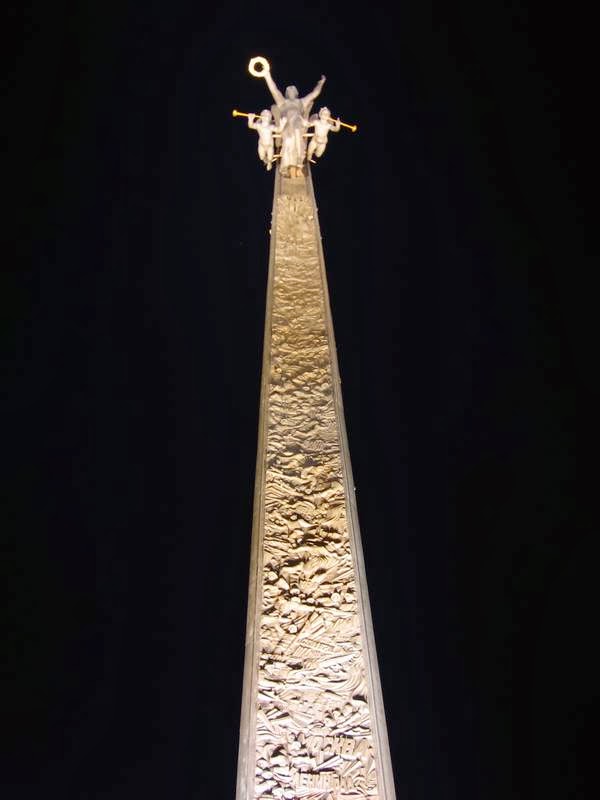
Nike atop Moscow Obelisk
Obelisk with a statue of Nike atop - Moscow


4) Beijing, China


5) Tokyo, Japan

Tokyo Sky Tree (obelisk form)


6) Argentina

Obelisk Buenos Aires Argentina


7) London

London Obelisk


8) Austria

Obelisk Fountain - Schönbrunn Palace - Vienna, Austria


9) Constantinople (modern Istanbul, Turkey)

Obelisk of Theodosis, Constantinople 390 A.D.


10) AEUR - Mussolini's United States of Europe Capital - today represents the European Continent State of Pan Europa

EUR outside Rome, Italy  Obelisk

11) Axum, Ethiopia


12) Luxor, Egypt - Place Concorde and Grand Orient, Paris, France 


The Obelisk shown came from Luxor, Egypt to Paris, France.

Place de la Concorde

The French Revolution was started by Masons and any number of related “Freethinkers” who at the Place de la Concorde in Paris (eastern end of the Champs-Élysées in the 8th arrondissement) is where they destroyed the statue of King Louis XV. In its place they erected the guillotine that executed King Louis XVI, Marie-Antoinette and a large number of other innocent people out of the Masons insane Satanic hatred of Christ and His followers.

Napoleon is a definite type of the Antichrist. Napoleon's expedition departed France hoping to obtain an obelisk for Napoleon. May 1830, Mohammed Ali, the Egyptian viceroy, gave the Obelisk of Luxor to Charles X of France. This one was the first obelisk taken out of Egypt in modern times. Two more for a total of three obelisks in modern times were taken, to London and New York. The Obelisk of Luxor now stands exactly where the Guillotine of the Reign of Terror was used to commit Regicide in the murder of King Louis XVI.
Place Concorde, Paris, France

Place Concorde, Paris, France

Place Concorde, Paris, France - Eiffel Tower in background
Grand Orient Masonic Temple, Paris France.

The Grand Orient figured prominently in the French Revolution and the Reign of Terror and subsequently in the whole destruction of all of European Christian civilization, both Church and State, and most recently in the complete apostasy of the Roman Catholic Church beginning at Vatican II. Note the onerous phrase, the cry of the Reign of Terror, in the Masonic Hall of Liberte, Egalite, Fraternite. It is quite rightly said that the French Revolution and France herself since the French Revolution has not had any Liberty and no Equality and of Brotherhood, nary a shred.

Grand Orient, Paris France - French Revolution Antichristian Motto

Grand Orient - Paris France

Grand Orient - Paris France

Grand Orient - Paris France


13) Vatican City - Rome, Italy


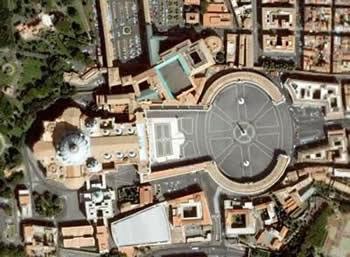
St. Peter's Square, Vatican City with Vatican Isis female shape surrounding in embrace Osirus' Phallic Obelisk

Statues of the Twelve Apostles gathered around Osirus' Phallic Obelisk


From the Catholic Dictionary, 1950

Priapus

Pri’a-pus. An old deity of fertility among the Greeks. In the Vulgate it refers to an obscene idol. Maacha, the mother of King Asa of Juda, was priestess of this abominable cult (3 Kings 15:13). Asa abolished it and destroyed the image (2 Paral. 15:16).


Hermes Trimegistus

Hermes Trimegistus, the Thrice Holy Hermes of the pagans (“holy” here has nothing to do with what the true God determines is holy) is the final Graeco-Egyptian Almighty pagan devil-god that emerges from the whole milieu of the all the paganisms of the Middle East and is the base for all the Hellenic-bodhi-Hindu syncresis (time of Alexander the Great) religious later final forms of the gods and goddesses of the East and the later Mahayana Buddhist variations (including their concomitant Buddhas and Bodhisattvas forms). Priapus is an integral part of Hermes Trimegistus. This is the total base and form of Hermeticism.

From below

“Titanes” - See St. Irenaeus. Teitans are Latins, Teitan spells 666 in Greek Isopsephia, which is the interpretation of Rev. 13:18 that St. Irenaeus gives for the number of the name of the Beast, the Antichrist, of his personal family name. He notes many names fit until the final one is revealed. Many of those names and applications of the number are typological of the Antichrist. 666 as applied to Solomon and his gold, 666 the number of the Great Devil Mother Goddess, 666 in the names of Antipopes of recent memory.


Note that Osirus and Isis in their bloody King Queen relationship produced a “son” which was actually the missing phallus of Osirus, Priapus. In Osirian-Sumerian Mesopotamian Babylonian Graeco-Egyptian religion that was the Obelisks erected in defiance of God to the sky to honor the Devil as Osirus the sky god conjured by the Great Devil Mother Triple Goddess Isis.

“PRIAPUS IDENTIFIED WITH THE EGYPTIAN GOD MIN

Diodorus Siculus, Library of History 4. 6. 1. (trans. Oldfather) (Greek historian C1st B.C.) : "We shall at this point discuss Priapos and the myths related about him . . . The Aigyptians (Egyptians) in their myths about Priapos say that in ancient times the Titanes formed a conspiracy against Osiris [Dionysos Sabazios] and slew him, and then, taking his body and dividing it into equal parts among themselves, the slipped them secretly out of the house, but this organ alone they threw into the river, since no one of them was willing to take it with him. But Isis tracked down the murder of her husband, and after slaying the Titanes and fashioning the several pieces of his body into the shape of a human figure, she gave them to the priests with orders that they pay Osiris the honours of a god, but since the only member she was unable to recover was the organ of sex she commanded them to pay to it the honours of a god and set it up in their temples in an erect position. Now this is the myth about the birth of Priapos [who the author identifies with the Egyptian god Min] and the honours paid to him, as it is given by the ancient Aigyptians." “


ENCYCLOPEDIA

PRIA′PUS (Priapos), a son of Dionysus and Aphrodite (Paus. ix. 31. § 2; Diod. iv. 6; Tibull. i. 4. 7; Schol. ad Apollon. Rhod. i. 932). Aphrodite, it is said, had yielded to the embraces of Dionysus, but during his expedition to India, she became faithless to him, and lived with Adonis. On Dionysus' return from India, she indeed went to meet him, but soon left him again, and went to Lampsacus on the Hellespont, to give birth to the child of the god. But Hera, dissatisfied with her conduct, touched her, and, by her magic power, caused Aphrodite to give birth to a child of extreme ugliness, and with unusually large genitals. This child was Priapus. According to others, however, Priapus was a son of Dionysus and a Naiad or Chione, and gave his name to the town of Priapus (Strab. xiii. p. 587; Schol. ad Theocr. i. 21), while others again describe him as a son of Adonis, by Aphrodite (Tzetz. ad Lyc. 831), as a son of Hermes (Hygin. Fab.160), or as the son of a long-eared father, that is, of Pan or a Satyr (Macrob. Sat. vi. 5). The earliest Greek poets, such as Homer, Hesiod, and others, do not mention this divinity, and Strabo (xiii. p. 558) expressly states, that it was only in later times that he was honoured with divine worship, and that he was worshipped more especially at Lampsacus on the Hellespont, whence he is sometimes called Hellespontiacus (Ov.Fast. i. 440, vi. 341; Arnob. iii. 10). We have every reason to believe that he was regarded as the promoter of fertility both of the vegetation and of all animals connected with an agricultural life, and in this capacity he was worshipped as the protector of flocks of sheep and goats, of bees, the vine, all garden-produce, and even of fishing (Paus. ix. 31. § 2; Virg. Ecl. vii. 33, Georg. iv. 110, with the commentators). Like other divinities presiding over agricultural pursuits, he was believed to be possessed of prophetic powers, and is sometimes mentioned in the plural (Tibull. i. 4. 67; Moschus, iii. 27). As Priapus had many attributes in common with other gods of fertility, the Orphics identified him with their mystic Dionysus, Hermes, Helios, &c. (Schol. ad Theocr. i. 21; Eustath. ad Hom. pp. 691, 242.) The Attic legends connect Priapus with such sensual and licentious beings as Conisalus, Orthanes, and Tychon. (Strab. l. c. ; Aristoph. Lys. 982; comp. Diod. iv. 6). In like manner he was confounded by the Italians with Mutunus or Muttunus, the personification of the fructifying power in nature (Salmas. ad Solin. p. 219; Arnob. iv. 11). The sacrifices offered to him consisted of the first-fruits of gardens, vineyards, and fields (Anthol. Palat. vi. 102), of milk, honey, cakes, rams, asses, and fishes (Anthol. Palat. x. 14; Ov. Fast. i. 391, 416; Serv. ad Virg. Georg. ii. 84). He was represented in carved images, mostly in the form of hermae, with very large genitals, carrying fruit in his garment, and either a sickle or cornucopia in his hand (Tibull. i. 1. 22, 4. 8; Virg. Georg. iv. 110; Horat. Sat. i. 8; Hirt. Mythol. Bilderb. p. 172). The hermae of Priapus in Italy, like those of other rustic divinities, were usually painted red, whence the god is called ruber or rubicundus. (Ov. Fast. i. 415, vi. 319, 333).
Source: Dictionary of Greek and Roman Biography and Mythology.

PARENTAGE OF PRIAPUS

Diodorus Siculus, Library of History 4. 6. 1 (trans. Oldfather) (Greek historian C1st B.C.) : "Now the ancients record in their myths that Priapos was the son of Dionysos and Aphrodite and they present a plausible argument for this lineage; for men when under the influence of wine find the members of their bodies tense and inclined to the pleasures of love. But certain writers say that when the ancients wished to speak in their myths of the sexual organ of males they called it Priapos (Priapus). Some, however, relate that the generative member, since it is the cause of the reproduction of human beings and of their continued existence through all time, became the object of immortal honour."
Strabo, Geography 13. 1. 12 (trans. Jones) (Greek geographer C1st B.C. to C1st A.D.) : "Priapos . . . was called the son of Dionysos and a Nymphe."
Pausanias, Description of Greece 9. 31. 2 (trans. Jones) (Greek travelogue C2nd A.D.) : "This god [Priapos] . . . is more revered [by the people of Lampsakos] than any other god, being called by them a son of Dionysos and Aphrodite."
Pseudo-Hyginus, Fabulae 160 (trans. Grant) (Roman mythographer C2nd A.D.) : "Sons of Mercurius [Hermes] : Priapus."
Suidas s.v. Priapos (trans. Suda On Line) (Byzantine Greek lexicon C10th A.D.) : "Priapos: was conceived from Zeus and Aphrodite; but Hera in a jealous rage laid hands by a certain trickery on the belly of Aphrodite and readied a shapeless and ugly and over-meaty babe to be born. His mother flung it onto a mountain; a shepherd raised it up. He had genitals [rising up] above his butt."

PRIAPUS & THE NYMPH LOTIS

The myth of Priapos and Lotis is almost identical to that of The myth of Priapos and Hestia in the section which follows.
Ovid, Fasti 1. 391 ff (trans.Boyle) (Roman poetry C1st B.C. to C1st A.D.) : "A donkey, too, is killed for the countryside's stiff guard [Priapos]. The cause is shameful, but it suits the god. You were holding, Greece, the feast of grape-crowned Bacchus [Dionysos], celebrated by custom each third winter. The gods who serve Lyaeus [Dionysos] also attended and whoever is not hostile to play, namely Panes and young Satyri and goddesses who haunt streams and lonely wilds. Old Silenus came, too, on a sway-backed donkey, and the red-groined terror of timid birds [Priapos whose garden statue functioned as a scarecrow]. They discovered a grove suitable for party pleasures and sprawled on grass-lined couches. Liber [Dionysos] supplied wine, they had brought their own garlands, a brook gave water for frugal mixing. Naiades were there, some with hair flowing uncombed, others with locks artfully coiffured . . . Some generate tender fires inside the Satyri . . . But red Priapus, the garden's glory and protection, fell victim above all to Lotis. He desires her, he wants her, he sighs for her alone; he nods at her and pesters her with signs. Disdain defines the pretty, beauty is trailed by pride : she teases and scorns him with her looks. It was night. Wine induced slumber and prone bodies lay everywhere, conquered by sleep. Lotis rested furthest away, tired from partying, in the grass beneath some maple branches. Her lover rises and, holding his breath, tracks secretly and silently on tiptoe. When he had reached the snow-white Nympha's secluded bed, he took care his breathing was soundless. And now he was poised on the grass right next to her, and still she was filled with a mighty sleep. His joy soars; he draws the cover from her feet and starts the happy road to his desires. Then look, the donkey, Silenus' mount, brays loudly, and emits untimely blasts from its throat. The terrified Nympha leaps up, fends Priapus off, and awakens the whole grove with her flight. And the god, whose obscene part was far too ready, was ridiculed by all in the moon's light. The author of the clamour [the donkey] was punished with death. He's a victim dear to Hellespont's god."
Ovid, Metamorphoses 9. 346 ff (trans. Melville) : "There is a lake [in Oikhalia, Oechalia] whose shelving sides had shaped a sloping shore, and myrtles crowned the ridge . . . Near the lakeside was a water-lotus flowered, its crimson blooms like Tyrian dye, fair hope of fruit to come . . . this shrub was the Nymphe Lotis who fled Priapus's lechery and found changed features there but kept her name."


PRIAPUS & THE GODDESS HESTIA

The myth of Priapos and Hestia is vitually identical to that of Priapos and Lotis described above.
Ovid, Fasti 6. 319 ff (trans.Boyle) (Roman poetry C1st B.C. to C1st A.D.) : "Should I omit or recount your shame, red Priapus? It is a very playful, tiny tale. Coroneted Cybele [Rhea], with her crow of turrets, invites the eternal gods to her feast. She invites, too, Satyri and Nymphae, Rural-Spirits; Silenus is present, uninvited. It's not allowed and too long to narrate the gods' banquet: night was consumed with much wine. Some blindly stroll shadowy Ida's dells, or lie down and rest their bodies in the soft grass. Others play or are clasped by sleep; or link their arms and thump the green earth in triple quick step. Vesta [Hestia] lies down and takes a quiet, carefree nap, just as she was, her head pillowed by turf. But the red saviour of gardens [Priapos] prowls for Nymphai and goddesses, and wanders back and forth. He spots Vesta [Hestia]. It's unclear if he thought she was a Nympha or knew it was Vesta. He claims ignorance. He conceives a vile hope and tires to steal upon her, walking on tiptoe, as his heart flutters. By chance old Silenus had left the donkey he came on by a gently burbling stream. The long Hellespont's god was getting started, when it bellowed an untimely bray. The goddess starts up, frightened by the noise. The whole crowd fly to her; the god flees through hostile hands. Lampsacus slays this beast [the donkey] for Priapus, chanting : `We rightly give flames the informant's guts.' You remember, goddess, and necklace it with bread. Work ceases; the idle mills are silent."

PRIAPUS & THE NYMPH POMONA

Ovid, Metamorphoses 14. 534 ff (trans. Melville) (Roman epic C1st B.C. to C1st A.D.) : "For fear of rustic force she [the Latin Hamadryas Pomona] walled her orchard in to keep away the sex she shunned. What tricks did they not try, the quick young light-foot Satyri, and the Panes . . . and he [Priapos], the god whose scythe or lusty loins scare thieves away--what did they all not try to win her love?"

PRIAPUS & HIS CONTEST WITH THE ASS

Pseudo-Hyginus, Astronomica 2. 23 (trans. Grant) (Roman mythographer C2nd A.D.) : "He [Dionysos] gave a human voice to the ass which had carried him. This ass later had a contest with Priapus on a matter of physique, but was defeated and killed by him. Pitying him because of this, Liber [Dionysos] numbered him among the stars."

PRIAPUS GUARDIAN OF FLOCKS, BEES & GARDENS

Diodorus Siculus, Library of History 4. 6. 1 (trans. Oldfather) (Greek historian C1st B.C.) : "We shall at this point discuss Priapos and the myths related about him, realizing that an account of him is appropriate in connection with the history of Dionysos . . . This god is also called by some Ithyphallos (Ithyphallus), by others Tykhon (Tychon). Honours are accorded him not only in the city, in the temples, but also throughout the countryside, where men set up his statue to watch over their vineyards and gardens, and introduce him as one who punishes any who cast a spell over some fair thing which they possess. And in the sacred rites, not only of Dionysos but of practically all other gods as well, this god received honour to some extent, being introduced in the sacrifices to the accompaniment of laughter and sport."
Diodorus Siculus, Library of History 6 Fragment 4 (from Tertullian On the Crown 13. 4) : "The writer [Diodoros] gives even to Priapos fillets."
Pausanias, Description of Greece 9. 31. 2 (trans. Jones) (Greek travelogue C2nd A.D.) : "This god [Priapos] is worshipped where goats and sheep pasture or there are swarms of bees; but by the people of Lampsakos he is more revered than any other god."
Virgil, Georgics 4. 110 ff (trans. Fairclough) (Roman bucolic C1st B.C.) : "Let the watchmen against thieves and birds, guardian Priapus, lord of the Hellespont, protect them [the bees of the beehive] with his willow hook."
Suidas s.v. Priapos (trans. Suda On Line) (Byzantine Greek lexicon C10th A.D.) : "He [Priapos] was called Periapos in the Italian language and was honored amongst the shepherds. His image is a child with a big erect member."
Suidas s.v. Androsathon :  "Androsathon (Man-pricked): Possessing large genitals [an epithet of Priapos]."
Greek TitlesTransliterationLatin SpellingTranslation
ΑνδροσαθωνAndrosathônAndrosathonMan-Pricked
ΙθυφαλλοςIthyphallosIthyphallusErect-Phallus
ΤυχωνTykhônTychonFortune
ΘριαμβοςThriambosThriambusThriamb
ΔιθυραμβοςDithyrambosDithyrambusDithyramb

CULT IN SIKYONIA (SOUTHERN GREECE)

I) ORNEAI Town in Sikyonia
Strabo, Geography 8. 6. 24 (trans. Jones) (Greek geographer C1st B.C. to C1st A.D.) : "Orneai [in Sikyonia] is named after the river that flows past it. It is deserted now, although formerly it was well peopled, and had a temple of Priapos that was held in honor; and it was from Orneai that the Euphronios who composed the Priapeia calls the god ‘Priapos the Orneatan.’ Orneai is situated above the plain of the Sikyonians, but the country was possessed by the Argives."

CULT IN BOIOTIA (CENTRAL GREECE)

I) MT HELIKON Mountain in Boiotia
Pausanias, Description of Greece 9. 31. 2 (trans. Jones) (Greek travelogue C2nd A.D.) : "[In the sanctuary of the Mousai (Muses) on Mount Helikon in Boiotia] is an image of Priapos worth seeing. This god is worshipped where goats and sheep pasture or there are swarms of bees; but by the people of Lampsakos (Lampsacus) he is more revered than any other god, being called by them a son of Dionysos and Aphrodite."

CULT IN MYSIA (ASIA MINOR)

I) LAMPSAKOS City in Mysia
Strabo, Geography 13. 1. 12 (trans. Jones) (Greek geographer C1st B.C. to C1st A.D.) : "Priapos [i.e. Lampsakos] is a city on the sea, and also a harbor. Some say that it was founded by Milesians . . . It was named after Priapos, who was worshipped there; then his worship was transferred thither from Orneai near Korinthos (Corinth), or else the inhabitants felt an impulse to worship the god because he was called the son of Dionysos and a Nymphe; for their country is abundantly supplied with the vine, both theirs and the countries which border next upon it, I mean those of the Parianoi and the Lampsakenoi. At any rate, Xerxes [historical Persian general] gave Lampsakos to Themistokles to supply him with wine. But it was by people of later times that Priapos was declared a god, for even Hesiod does not know of him; and he resembles the Attic deities Orthane, Konisalos (Conisalus), Tykhon (Tychon), and others like them."
Pausanias, Description of Greece 9. 31. 2 (trans. Jones) (Greek travelogue C2nd A.D.) : "This god [Priapos] is worshipped where goats and sheep pasture or there are swarms of bees; but by the people of Lampsakos he [Priapos] is more revered than any other god, being called by them a son of Dionysos and Aphrodite."
Athenaeus, Deipnosophistae 1. 30b (trans. Gullick) (Greek rhetorician C2nd to C3rd A.D.) : "Among the people of Lampsakos, Priepos who is the same as Dionysos, is held in honour and has the by-name Dionysos as well as Thriambos and Dithyrambos."
Ovid, Fasti 6. 319 ff (trans.Boyle) (Roman poetry C1st B.C. to C1st A.D.) : "Lampsacus slays this beast [the donkey] for Priapus, chanting: ‘We rightly give flames the informant's guts."
Valerius Flaccus, Argonautica 2. 622 ff (trans. Mozley) (Roman epic C1st A.D.) : "Lampsacus whose dwellers no triennial festival of Bacchus nor Phrygian madness bids gather in secret caverns, but their own god [Priapos] hales them to Venus [Aphrodite]. High over the city they see his altars and the carvings of his towering shrine."

PRIAPUS IDENTIFIED WITH THE EGYPTIAN GOD MIN

Diodorus Siculus, Library of History 4. 6. 1. (trans. Oldfather) (Greek historian C1st B.C.) : "We shall at this point discuss Priapos and the myths related about him . . . The Aigyptians (Egyptians) in their myths about Priapos say that in ancient times the Titanes formed a conspiracy against Osiris [Dionysos Sabazios] and slew him, and then, taking his body and dividing it into equal parts among themselves, the slipped them secretly out of the house, but this organ alone they threw into the river, since no one of them was willing to take it with him. But Isis tracked down the murder of her husband, and after slaying the Titanes and fashioning the several pieces of his body into the shape of a human figure, she gave them to the priests with orders that they pay Osiris the honours of a god, but since the only member she was unable to recover was the organ of sex she commanded them to pay to it the honours of a god and set it up in their temples in an erect position. Now this is the myth about the birth of Priapos [who the author identifies with the Egyptian god Min] and the honours paid to him, as it is given by the ancient Aigyptians."

Sources:
  • Diodorus Siculus, The Library of History - Greek History C1st B.C.
  • Strabo, Geography - Greek Geography C1st B.C. - C1st A.D.
  • Pausanias, Description of Greece - Greek Travelogue C2nd A.D.
  • Athenaeus, Deipnosophistae - Greek Rhetoric C3rd A.D.
  • Hyginus, Fabulae - Latin Mythography C2nd A.D.
  • Hyginus, Astronomica - Latin Mythography C2nd A.D.
  • Ovid, Metamorphoses - Latin Epic C1st B.C. - C1st A.D.
  • Ovid, Fasti - Latin Poetry C1st B.C. - C1st A.D.
  • Virgil, Georgics - Latin Bucolic C1st B.C.
  • Valerius Flaccus, The Argonautica - Latin Epic C1st A.D.
  • Suidas - Byzantine Greek Lexicon C10th A.D.
Other references not currently quoted here: Tibullus 1.4.7 & 1.4.67; Scholiast on Apollonius Rhodius 1.932; Scholiast on Theocritus 1.21; Tzetzes on Lycophron 831; Macrobius Sat. 6.5; Arnobius 3.10 & 4.11; Virgil Eclogues 7.33; Eustathius on Homer 691 & 242; Salmas. on Solin 219; Anthology Palatine 10.14; Servius on Virgil's Georgics 2.84; Horatius Saturnalia 1.8
___________________________________________________________________________________

PRIAPUS as a later Hellespont god


PRIAPOS was [later] the rustic god of the bounty of the vegetable garden. He was also honoured as the protector of sheep, goats, bees, the vine and of all garden produce.
Priapos was depicted as a dwarfish man with a huge phallus, which symbolised garden fertility. His head was crowned with a peaked Phrygian cap, belying his [supposed] origin as a god native to the Mysian city of Lampsakos on the Hellespont. His cult was introduced into Greece and Italy, where his mythology were reinterpreted in Greek terms. Primitive statues of the god were traditionally set-up in vegetable plots to promote fertility with the added benefit of functioning as a type of "scarecrow" scaring away birds. The Greeks naturally described the god as the son of one of the phallic gods : either Hermes or Dionysos. His mother was usually Aphrodite.

Priapos was closely identified with various Greek phallic deities such as Dionysos, Hermes and the satyrs Orthanes and Tykhon.

The most famous extant depiction of Priapos is the Pompeian wall-painting {shown above - [not shown since it is obscene]}. Here he is depicted weighing his enormous member on a set of scales against the produce of the fields. He is crowned with a peaked Phrygian cap, wears Phrygian boots, and has a Bacchic, cone-tipped thyrsus resting by his side.
PARENTS
[1.1] DIONYSOS & APHRODITE (Pausanias 9.31.2, Diodorus Siculus 4.6.1)
[1.2] DIONYSOS & A NAIAS (Strabo 8.587)
[1.3] DIONYSOS & KHIONE (Scholiast on Theocritus 1.21)
[2.1] ADONIS & APHRODITE (Tzetzes on Lycophron 831)
[2.2] HERMES (Hyginus Fabulae 160)
[3.1] ZEUS & APHRODITE (Suidas s.v. Priapos)

http://www.theoi.com/Georgikos/Priapos.html

, , , , , , , , , , , ,, , , , , , 

Friday, November 22, 2013

Evil, Evil, Evil Devil-children of the French Revolution and their murders of Presidents, Kings, Rulers and everybody else they can

666 (20)

666 and the triple Goddess (3)

666 Beast computer (3)


CLICK ON PICTURE

click on picture
Last honest President of the United States, 35th President of the United States, President John Fitzgerald Kennedy - the Judeo Mason world conspiracy of the Antichrist assassinated him {about 18:30 UTC} on Friday, November 22, 1963


A day that lives in infamy November 22. 1963. Dallas TX John F. Kennedy Assassinated by sneak attack act of War by rogue non-state IsraHell on the United States of America

The Justice of God: Architects of Deception

The "Architects of Deception" planned the horrors of both the Bolsheviks and the Nazis as well as many others, to set people up throughout the world against one another and divert their attention from the planners behind the scenes and blame only what the "other" guys were doing and not place the blame squarely on EVERYONE'S shoulders who were and are part of it.

Case in point: Zionist interloper at war by choice against innocents - transgressors of God's Law, Israel is totally evil, but so are the Red Chinese genocidists - and - the Russian Communists of today (who are still the unseen driving force behind the United Nations worldwide totalitarian collectivism) - and - the Neo-Nazi element in the Washington Beltway that directs war against innocent people in the Middle East - and - the Pan European profiteers - as well.

The Justice of God: Revelations: Architects of Deception Part X

The Justice of God: Revelations: Architects of Deception - Jüri Lina

The Justice of God: Revelations: Jewish eugenics pre-dates Hitler's Master Race

The Justice of God: Revision Notes: Appeasement: Peace to War 1919-1939


The Justice of God: Revelations: Architects of Deception - Jüri Lina

Revelations: Architects of Deception - Jüri Lina


Architects of Deception


Based on the archives of the famous and powerful French Grand Orient Lodge, captured in June 1940 and later made public by the Russians, JüriLina details in a 600-page the true history of how Freemasonry has conspired for world domination and orchestrated all major revolutions and wars to create a one world Government.

Lina writes that 300 Jewish banking families have used Freemasonry as an instrument to subvert, control and degrade the Western world and force their "New World Order" through fear, war and terrorism as well as other means


CONTENTS
1. Consensus Trance 13
2. The Dark History of the Knights Templar 33
3. The Rise of Freemasonry 55
4. The Powerful Financial Sphere 139
5. The Global Power of Freemasonry 163
6. The Red and Bloody Nature of Freemasonry 280
7. How the Freemasons Helped Hitler to Power 356
8. The Crimes of the Masonic Elite 472
9. Hidden Knowledge 523

Introductory Explanations 9
Myths as a Base of Power 18
Gagarin Was Never in Space 26
The Origin of the Knights Templar 38
The Vast Influence of the Knights Templar 39
Philip IV Strikes Back 41
The Curse of the Grand Master 49
The Discovery at Rennes-le-Chateau 51
The Infiltration Begins 63
Secret Societies Take Over the Craftsmen's Guilds 68
Development of the Masonic System 78
The Highest Degrees 88
Other Masonic Rites 91
The Symbols 99
Masonic Magic 118
Masonic Ideology 134
Interest as a Weapon 142
Economic Slavery 157
Freemasonry and Politics 164
The Illuminati 169
We Are Ruled by the Freemasons 180
The United States - the Masonic Executive Base 188
Harry Shippe Truman 202
The Case of Kissinger 211
Sinister Plans 215
The Expansion of Freemasonry 220
P2 - the Most Infamous Masonic Sect 224
Club 45 or "the Red Lodge of Vienna" 242
Masonic Influence in Sweden 245
The Carbonari 249
Resistance against Freemasonry 253
The Masonic World 269
The Historical Background of the Grand Orient 281
The Justice of the Freemasons 289
Masonic Corruption 297
The Destruction of Russia 300
Blood-Red Support of the Communists 314
The Masonic Contribution to Soviet Russia 327
Stalin's Struggle against Freemasonry 330
The Secret Masonic Archives 331
The Hidden Influence 337
Hitler's Meetings with His Financial Backers 366
Advertising for Hitler 368
Attempts to Investigate Hitler's Secret Income 371
Hitler's Goal 372
Secret Manipulations 378
The American Contribution 394
Close Collaboration between Nazis and Zionists 398
Who was Hitler? 409
The Magic of the National Socialists 415
Nazism and Freemasonry 434
Nazi Plans for a European Confederacy 438
Sinister Plans behind the Scenes 443
Aid Continued during the War 448
Holocaust Hysteria 453
Unlimited Evil 472
The Double-Dealing of the United States 477
Conflicts in the Balkans 503
Resistance against the New World Order 515
Undesired Inventions 524
Vaccination Injuries 528
Dangerous Substances 533
Damaging Phenomena 542
The Importance of Energies 544
More Effective Weaponry 546
Essential Conclusions 550
Index 565


Traditional Catholic Prayers: Communista Internationale Sixth - Freemasonry


And when all the evil has come to pass, but the faithful of Christ have not apostatized from Him, then will come the Lord Jesus Christ from heaven with His angels and reward the just with eternal life and condemn the wicked to hell forevermore.


Pharisaism is Talmudism, Talmudism is Judaism, Judaism is Zionism, Zionism is Communism, Communism is Nazism, Nazism is the New World Order, the New World Order is the reign of the Antichrist, they are all the Six forms of ultimate Satanic evil.

Communista Internationale Sixth: "The Justice of God: Freemasonry - The movements of Freemasonry in time throughout the earth are aimed at culminating in the rule of the Antichrist on earth - Satan is the literal god of Freemasonry. That was adopted by the Freemasons at their beginning from Satan himself. Immediately after that they incorporated Satanic hermetism and then in time, three centuries later, Ari Luria's Devil worship in his writings on Kabalah. The key to it all is in Isaiah Chapter 14 and Ezechiel Chapter 28. In those chapters, the Holy Spirit of God reveals that Satan, Lucifer (from Latin), literally the dark star in Hebrew, was a special angelic mediator who was a throne Cherub of God, who immediately upon his creation refused to serve God and turned inward to worship himself. Ever since that first moment of Satan's creation he has sought to turn man to worship him instead of God. This plan of Satan has as its final vehicle, Freemasonry, much underestimated and totally secretive on purpose. The Freemasons are the ones behind all the Illuminati and Zionists and Bankers and Tyrants and Communism and Nazism and the entire New World Order."


(Full) In the Shadow of Hermes by Jüri Lina (2011)


Glavnoye Razvedyvatel'noye Upravleniye: Jüri Lina - Recommended reading


Under the sign of the Scorpion- the Rise and Fall of the Soviet Empire


SECOND, ENLARGED EDITION IN ENGLISH

This 447 page book provides stunning information about the secret role of the freemasons in international politics, about the bloody upheavals in France in 1789 and in Russia in 1917. The Author reveals the presence of dark Masonic forces behind the scenes (both Lenin and Trotsky were high-ranking freemasons and Illuminati, obeying the International Masonic Council). The Author pursues the history of the communist ideology from the Illuminati of the 18th century, to Moses Hess and his disciples Karl Marx and Friedrich Engels. The Illuminati movement was founded on the 1st of May 1776 in Ingolstadt, Bavaria. The book describes the role of the Illuminati in the French "Revolution". It then goes on to examine the so-called Russian Revolutions in 1917. J�ri Lina shows how the events in Russia between 1917 and 1991 still affect the fate of the world.

The author tries to answer questions like: Where did the Communist idea originate and how was it developed? Why did powerful international financial circles finance the "Russian revolutionaries" in March and November 1917? What was the purpose of the social destruction that followed and in which way did this serve the forces behind the Communists?
"Under the Sign of the Scorpion" will change the reader's perception of reality. After the fall of the Soviet power on the 24th of August 1991, the official archives have begun to reveal their secrets to amazed Russian historians. There is a constant flow of new shocking information but only a trickle has as yet reached us in Western Europe and America. Above all, we lack an overall picture. It is this picture which J�ri Lina attempts to give us in his book, which is largely based on released Russian material.
The author also explains why the Soviet Union was abolished and is currently being recreated under another name - the European Union.

"Under the Sign of the Scorpion" is likely to change the reader's perception of reality. The reader should gain insight into another reality from where certain powers are attempting to control us with invisible threads.
The book is illustrated.


International customers may order the book by paying US $ 40 (USA,), 25 (UK), 35 euros within the European Union.


If you are a resident of the United States, you can send a money order on 40 US dollars to our agent in North America in his name:

Mr. Reino Trass
50 Old Kingston Road 5-116
Scarborough, Toronto, Ontario M1E 4Y1
Canada

Phone: + (416) 724 55 16


If you are a resident of Canada, you can send a check or a money order on 45 Canadian dollars to our agent in North America in his name:

Mr. Reino Trass
50 Old Kingston Road 5-116
Scarborough, Toronto, Ontario M1E 4Y1

Phone: + (416) 724 55 16


If you are a resident of the European Union, please, pay the money into Juri Lina's bank account in Sweden:

Swift: HANDSESS
account 374 462 682

IBAN: SE03 6000 0000 0003 7446 2682
In Svenska Handelsbanken (Hallunda Torg,
Box 24, 145 01 Norsborg,
Sweden), to Jüri Lina.

You may also mail cash directly to:


Jyri Lina
Referent
Friggs vag 6 IV
145 69 Norsborg (Stockholm)
Sweden

Or contact Juri Lina via e mail jyrilina@yahoo.com.


Contents

1. Myths Concerning False Communists and Sham Christians

2. The Illuminati: Triumph of Treachery
The Ideological Background of the Illuminati
The First Disclosures
The Murders of Mozart and Schiller
The Illuminati as Infiltrators
The Jesuits’ Totalitarianism as a Prototype
The Illuminati’s First National Coup
The Illuminati’s Way to World Power
3. Karl Marx –Evil’s Idol
Moses Hess – the Teacher of Marx and Engels
The Background of Marx’s View of Humanity
Incredible Admissions by Marx, Disraeli and others
Marx and Engels as Illuminati
1848: "The Year of Revolution" – the First Wave
March 1848 – The Prepared Plan
The Second Wave 1848-49>
The Illuminist Terror Continues...
The Truth Behind the Myths
Marx as a Publicist
The Moral Bankruptcy of Marxism
4. The Unknown Vladimir Ulyanov
Lenin as a Freemason
The First Freemasons in Russia
Lenin’s Nature
Lenin’s Terror
The Ideological Background of the Terror
Lenin’s Last Days
5. Leon Trotsky – Cynic and Sadist
Trotsky as a Freemason
Trotsky’s Teacher Parvus
The Attempts at a Coup d’�tat in 1905
Trotsky Abroad
Trotsky as a Merciless Despot
Trotsky’s Comrades
The fall of Admiral Shchastny
The Kronstadt Rebellion
Trotsky as a Grey Eminence
Trotsky as an Anti-intellectual
The Murder of Sergei Yesenin
Stalin as Victor
The Murder of Trotsky
6. How the Communists Reached Power
The Background of the First World War
Where did the Russian Jews originate?
The Coup in February 1917
Similarities to the Deposition of the Shah
The Return of Lenin and Trotsky
Revelations in the Press
Kornilov’s Revolt
The Take-Over of Power
The German Aid
The Beginning of the Government Terror
7. Through the Labyrinth of Murder

8. The Bloodthirsty Wolf of the Kremlin – Lazar Kaganovich
Kaganovich as a Grey Eminence
Destruction of Russian Culture
The Great Famine and Other Crimes
The Great Terror
Beria’s Contribution
The Murder of Stalin
The Power Struggle After Stalin’s Death
9. American Aid to the Soviet Union
"Intervention" as a Diversion
Famine as a Weapon
Deals with the Bolsheviks
Collectivisation as a Weapon
Construction of the Soviet Regime
Increasing American Support
War Aid to Moscow
Foreign Slaves in the Soviet Union
Stalin’s Holy War
Aid During the "Cold War"
Dismantling the Soviet Union
Phasing Out of Communism in Eastern Europe
The United States Also Helped the Chinese Communists Gain Power.

10. The Communist Take Over in Estonia

Some Conclusions
Index


Lenin as a Freemason

Whether Lenin was a freemason as early as in the 1890s is not yet possible to determine but he worked in the same way as subversive groups usually do. The Illuminati, the Grand Orient, B'nai B'rith (Sons of the Covenant), and other Masonic lodges were all interested in agitating the workers towards certain "useful" goals.
It is important to stress that Lenin and his henchmen did not work for a living. They could still afford to travel around Europe (then relatively more expensive than now) and live in luxury. These professional revolutionaries had only one task - to agitate the workers. Lenin's later activity shows clearly how he followed Adam Weishaupt's line.
Several sources reveal that Lenin became a freemason whilst abroad in 1908. One of these sources is a thorough investigation: Nikolai Svitkov's "About Freemasonry in Russian Exile", published in Paris in 1932. According to Svitkov, the most important freemasons from Russia were Vladimir Ulyanov-Lenin, Leon Trotsky (Leiba Bronstein), Grigori Zinoviev (Gerson Radomyslsky), Leon Kamenev (actually Leiba Rosen-feld), Karl Radek (Tobiach Sobelsohn), Maxim Litvinov (Meyer Hennokh Wallakh), Yakov Sverdlov (Yankel-Aaron Solomon), L. Martov (Yuli Zederbaum), and Maxim Gorky (Alexei Peshkov), among others.
According to the Austrian political scientist Karl Steinhauser's "EG - die Super-UdSSR von morgen" / "The European Union - the Super Soviet Union (USSR) of Tomorrow" (Vienna, 1992, p. 192), Lenin belonged to the Masonic lodge Art et Travail (Art and Labour). The famous British politician Winston Churchill also confirmed that Lenin and Trotsky belonged to the circle of the Masonic and Illuminist conspirators. (Illustrated Sunday Herald, 8 February 1920.)
Lenin, Zinoviev, Radek and Sverdlov also belonged to B'nai B'rith. Researchers who are specialised in the activities of B'nai B'rith, including Schwartz-Bostunich, confirmed this infor-mation. (Viktor Ostretsov, "Freemasonry, Culture and Russian History", Moscow, 1999, pp. 582-583.)
Lenin was a freemason of the 31st degree (Grand Inspecteur Inquisiteur Commandeur) and a member of the lodge Art et Travail in Switzerland and France. (Oleg Platonov, "Russia's Crown of Thorns: The Secret History of Freemasonry", Moscow, 2000, part II, p. 417.)
When Lenin visited the headquarters of Grand Orient on rue Cadet in Paris, he signed the visitors' book. (Viktor Kuznetsov, "The Secret of the October Coup", St. Petersburg, 2001, p. 42.)
Together with Trotsky, Lenin took part in the International Masonic Conference in Copenhagen in 1910. (Franz Weissin, "Der Weg zum Sozialismus" / "The Road to Socialism", Munich, 1930, p. 9.) The socialisation of Europe was on the agenda.
Alexander Galpern, then secretary of the Masonic Supreme Council, confirmed in 1916 that there were Bolsheviks among the freemasons. I can further mention Nikolai Sukhanov (actually Himmer) and N. Sokolov. According to Galpern's testimony, the freemasons also gave Lenin financial aid to his revolutionary activity. This was certified by a known freemason, Grigori Aronson, in his article "Freemasons in Russian Politics", published in the Novoye Russkoye Slovo (New York, 8-12 October 1959). The historian Boris Nikolayevsky also mentioned this in his book "The Russian Freemasons and the Revolution" (Moscow, 1990).
In 1914, two Bolsheviks, Ivan Skvortsov-Stepanov and Grigori Petrovsky, contacted the freemason Alexander Konovalov for economic aid. The latter became a minister in the Provisional Government.
Radio Russia also spoke of Lenin's activities as a freemason on 12 August 1991.


THROUGH THE LABYRINTH OF MURDER

It was the morning of the 30th of August 1918. A cyclist turned up in Petrograd’s Palace Square at around nine o’clock. He stopped at house number 6, the headquarters of the Commune Commissariat for Internal Affairs and the Extra-Ordinary Commission, the Cheka. This terror organisation had been founded on 7 December 1917, but officially it did not exist. Only on the 18th December 1927 did Pravda publish the decree officially establishing the Cheka. The cyclist was a young man wearing a leather jacket and an officer’s cap. He left his bicycle by the door and entered.
It was reception day at the Commissariat for Internal Affairs. The visitors were waiting in the hall and did not notice the young man who sat down near the outer door.
Moisei Uritsky (actually Boretsky) arrived in his car at around ten o’clock. He was the chairman of the Petrograd Cheka. Uritsky became infamous as the "Butcher of Petrograd". He threatened to kill all Russians who spoke their native language well. He claimed there was no greater pleasure than watching monarchists die, according to Igor Bunich ("The Party’s Gold", St. Petersburg, 1992) and Oleg Platonov ("The History of the Russian People in the Twentieth Century", Moscow, 1997, p. 613). Uritsky had executed 5000 officers with his own hands. Now he quickly walked towards the lift door. Suddenly several shots were heard. It was the young man in the leather jacket who had approached Uritsky and shot him in his head and body. Uritsky collapsed. The murderer ran out into the street, jumped on his bicycle and began pedalling as fast as he could.
When they began to chase him by car, he threw away his bicycle and ran into the British Representation. He left the representation after having donned a longcoat. When he saw Red Guards, he opened fire but was quickly overpowered.
This was the official description of Moisei Uritsky’s murder. The suspect was a 22-year-old Jewish student of technology, Leonid Kannegisser. This cock-and-bull story was published in 1975 in the book "The Elimination of the Anti-Soviet Subversive Movement" by D. Golinkov, who used to investigate especially important cases at the office of the Public Prosecutor of the Soviet Union.
The doctor of history, P. Sofinov, described the same event in a very different manner in 1960, in his book about the history of the Cheka. On the morning of the 30th of August, the Social Revolutionary Kennigisser, who was the freemason Savinkov’s agent as well as a spy for the British and the French, murdered the chief of the Cheka in Petrograd, Moisei Uritsky, in his office. Felix Dzerzhinsky (actually Rufin) gave orders to search the British Embassy on the 31st of August.
The Social Revolutionary Kennigisser had become the student Kannegisser in the meantime, and now he had murdered Uritsky in the hallway of the Cheka instead of in Uritsky’s office. Sofinov’s version probably seemed too contrived to be credible.
Grigori Nilov’s (Alexander Kravtsov’s) book "The Grammar of Leninism" was published in London in 1990. In this book the author gave neither theory credibility. Instead he claimed that the Bolshevik party and the central organisation of the Cheka with Lenin and Dzerzhinsky at the head were behind Uritsky’s murder.
The book "The Party’s Gold" by the historian Igor Bunich was published in St. Petersburg in 1992. Igor Bunich reveals that the murder of Uritsky was organised by Dzerzhinsky’s prot�g� Gleb Boky who later became Dzerzhinsky’s successor. The Jewish Chekist, Boky, used to feed the flesh of the executed to the animals in the zoo. Igor Bunich demonstrated that Lenin personally gave the order to murder Uritsky and also to stage an attempt on his own life to give himself a reason to immediately begin the mass terror against the Russian population. The murder was also Uritsky’s punishment for stealing some of the confiscated riches from behind Lenin’s back, together with V. Volodarsky (actually Moisei Goldstein) and the freemason Andronnikov (who was chief of the Cheka in Kronstadt). Everything was sold via certain Scandinavian banks – but more about that later.
The murder of Sergei Kirov (actually Kostrikov) on 1 December 1934 was in many ways similar to Uritsky’s murder. Kirov was officially murdered by Leonid Nikolaiev. Both of those high party functionaries had been murdered professionally and without obstacles. Both were warned in advance. Both murderers could freely gain entrance to the respective buildings.
It is clear today that Stalin was behind the murder of Kirov, despite the fact that there are no documents about this. There is no lack of evidence and logical arguments. Kirov’s bodyguard was prevented from accompanying him, so that the real murderer could shoot the Leningrad Party Secretary at exactly 4:30 in the afternoon. That event provided a good reason for Stalin to begin his campaign of mass terror. At least 7 million people were killed during that campaign and 18 million were imprisoned. 97 per cent of the participants at the 1934 Party Congress were liquidated.
Kravtsov presented some suspect circumstances in connection with the murder of Uritsky, who was also a member of the Central Committee. No analysis was made of Kannegisser’s revolver and ammunition. The Cheka did not seem to want the truth to come out. Kannegisser was never taken to trial, but was illegally killed. If Kannegisser had really been a Social Revolutionary, then a trial would have been a propaganda triumph for the regime. It would have been publicly announced who planned the murder. But not even the motive for Uritsky’s murder was ever revealed.
In contrast, it is known now that Lenin became furious when he received reports from Alexander Parvus in Berlin in which it was revealed that someone in Petrograd had stolen from Lenin. Just before Dzerzhinsky had travelled to Switzerland to investigate the situation. It turned out that not all the cargoes had reached Berlin; not all the money had ended up in the Swiss bank accounts of Lenin and his approved comrades. Some cargoes of "nationalised" goods had been sent to Sweden, including many valuable icons (some of these are still on display in the National Museum in Stockholm), the money had gone into the hands of other people than Trotsky and Lenin. The guilty parties were soon found, in June 1918. The main suspects were Uritsky, Volodarsky and Andronnikov (the chief of the Cheka in Kronstadt). They had stolen whole cargoes and sold everything through different Scandinavian banks. 78 million roubles in gold had vanished in this way. (Igor Bunich, "The Party’s Gold", St. Petersburg, 1992, p. 41.) The thieves (others were also involved) had stolen goods worth a total of 2.5 billion roubles in gold. At various auctions in Stockholm in the autumn of 1995, Russia began buying back valuable antique furniture which had been illicitly transported to Sweden.
This came as an unpleasant surprise for Parvus, since Uritsky and Volodarsky had been his favourite disciples. Parvus had founded a Yiddish newspaper, Arbaiter Stimme (Worker’s Voice) for Uritsky in Copenhagen, on which Grigory Chudnovsky and Nikolai Gordon (Leiba Alie Hael Gordon) had also worked. The latter was a Latvian Jew and a close collaborator with Grigory Zinoviev (Ovsei Radomyslsky).
In Moscow, Lenin promised to solve the problem. And indeed, Volodarsky was murdered in the same month. Uritsky led the investigation and learned the truth, upon which he also was murdered.
Kannegisser declared that he had acted alone. The Social Revolutionaries denied all knowledge of Kannegisser. He had never been a member of their party.
Even the circumstance that Kannegisser was wearing an officer’s cap was peculiar when others had hidden their caps to avoid being executed. It seems he wanted to draw attention to himself. The fact that he ran into the British Embassy to change was also surprising. He only took off his leather jacket and put on a longcoat. Why, then, did he run away from the site of the murder at all? It was also very odd that he managed to approach Uritsky unhindered and that he was able to escape with the same ease after shooting him. It was impossible to enter without a special permit, since there were armed guards at the door. Unknown persons could not even speak to Uritsky on the telephone. This has been confirmed by Mikhail Aldanov. Why did no one react? They saw and heard everything!
Mikhail Aldanov demonstrated in his study that Kannegisser could not shoot. Aldanov knew both him and his family well. How then, could Kannegisser hit Uritsky in his head like a sharpshooter when the latter was walking quickly towards the lift? It appears that Kannegisser was used as a shadowman, just as Leonid Nikolaiev was later used in Kirov’s murder.
Moreover, Lenin, on the afternoon of the 30th of August 1918, sent Dzerzhinsky a short letter, where two people who had shot Uritsky were named. Why has nothing been mentioned about these two later? Who were they?
The fact that Kannegisser admitted to the crime is irrelevant, since the Chekist torturers could make anyone admit to anything. In this case, the opportunity was taken to accuse the right wing of the Social Revolutionaries of the murder.
It has now been confirmed that the central organisation of the Cheka, headed by Gleb Boky, was behind Uritsky’s murder. (Igor Bunich, "The Party’s Gold", St. Petersburg, 1992, p. 47.)
So the motive was to exact revenge on Uritsky for his thefts. The main purpose was to be given a reason to begin the mass terror. The murder of Kirov had the same motive. But was there not also another reason to dispose of Uritsky now that he had solved the mystery of another murder?
V. Volodarsky (Moisei Goldstein) had been murdered under puzzling circumstances on June 20, 1918. He was the people’s commissary for press, propaganda and agitation. His murderer was at once stamped as a right wing Social Revolutionary, despite the fact that he was never caught.
The Bolshevik leadership in Moscow wanted to begin the massacre immediately. Moisei Uritsky, who investigated the murder of Volodarsky, refused to agree to this. He suspected the hand of the central leadership behind this murder. That was why it was impossible to use this murder as a pretext. Lenin was beside himself with rage. This is clear from Lenin’s angry telegrams, sent on the 26th of June 1918 to Grigori Zinoviev, the chairman of the Petrograd Party Committee. Lenin wrote, among other things: "We in the Central Committee heard today that Piter’s workers want to respond to Volodarsky’s murder with terror but you (not you personally, but Piter’s civil servants) held back. I protest strongly!"
The only one who could ignore the demands to begin the terror was Petrograd’s 45-year-old chief Chekist, Moisei Uritsky. According to Alexander Kravtsov, this telegram clearly shows that the murder of Volodarsky was planned and organised by the Cheka under orders from Lenin. This was confirmed by the historian Igor Bunich.


Kornilov’s Revolt 

The Supreme Commander of the Russian army, General Lavr Kornilov (1870-1918), no longer wanted to take part in the shady game of the revolutionary freemasons. He broke away from them and began preparations in Mogilev to overthrow Kerensky’s government. Kornilov understood that those left-wing ministers, who for many years had been shouting that they could do better than the Tsar’s ministers were actually perfectly ignorant people.
According to the prevailing myth, the February revolution was a very positive event. In reality, this coup d’�tat led only to anarchy, as the writer Alexander Solzhenitsyn emphasised in a BBC interview.
On 19 August (1st September), Kornilov ordered his Cossacks to attack Petrograd. On 25 August (7th September) Kornilov said to his chief of staff: "It is time to hang the Germans’ supporters and spies led by Lenin. And we must destroy the soviets so that they can never assemble again!"
On the same day he sent General Alexander Krymov’s troops towards Petrograd with orders to hang all soviet members. (John Shelton Curtiss, "The Russian Revolution of 1917", New York, 1957, p. 50.)
In his proclamation on August 26th (September 8th), (Novoye Vremya, 11th of September 1917), Kornilov accused the Provisional Government of co-operating with the Germans to undermine the state and army. He wanted to dissolve the soviets and demanded that Kerensky should step down and give the power up to him. Kornilov understood that the Bolsheviks were the greatest danger to Russia. That was why he wanted them all imprisoned.
Kerensky knew he had been exposed. His game was over. So he continued releasing imprisoned Bolsheviks. Kozlowski was also set free. He worked as a Chekist after the Bolsheviks’ take-over of power.
Kerensky was seized with panic and declared on the 27th of August (September 9th) that Kornilov was a mutineer and officially deprived him of his command. Kerensky turned to the Bolsheviks for help against Kornilov to salvage whatever he could. All the Bolsheviks were, as if by magic, immediately cleared of all charges and presented as the best possible defenders of democracy. Had not Trotsky said in the United States that power should be given to whoever was best able to develop democracy in Russia? The Bolsheviks, however, did everything they could to keep Kerensky in power. It was still too early for them to take over. The Bolsheviks had completely "forgotten" Lenin’s slogan: "No support for the Provisional Government!" ("The Shorter Biography of Lenin", Moscow, 1955, p. 168.)
The Bolsheviks began organising political strikes. They encouraged the workers and soldiers to defend the government. On the 27th of August the socialists founded a Central Committee against the counter-revolution together with the Bolsheviks. They ordered thousands of sailors from Kronstadt to Petrograd. The workers of Petrograd were forcibly mobilised. The Bolsheviks threatened to kill them if they did not obey. The Red Guards were immediately given back the weapons which had been confiscated during the fierce July days. The soviets began arresting people, primarily those who were suspected of sympathising with Kornilov. Thousands of officers were arrested in this way. A total of 7000 politically "suspect" people were arrested. (John Shelton Curtiss, "The Russian Revolution of 1917", New York, 1957, p. 53.)
The railwaymen were also mobilised and began sabotaging the railways. Thus Kornilov’s �lite troops were halted and surrounded.
International freemasonry suddenly began using enormous resources to halt Kornilov, since the appearance of his revolt on the political scene had not been in the manuscript; he had to be removed by any means possible, including guile and violence. He was depicted as the worst thing that ever happened to Russia. Myths about him continue to be spread to this day. It is even claimed that he was ignorant of politics.
The freemasons began a huge propaganda campaign among Kornilov’s soldiers who were thoroughly scared and confused. General Alexander Krymov (a freemason) was invited to negotiations with Kerensky. I do not know what they threatened Krymov with, but upon leaving this meeting he shot himself (if it was really he who held the weapon).

The freemasons succeeded with their combined efforts in stopping Kornilov’s national troops barely a week later, on 30 August (12th September). The left-wing leaders have always regarded right-wing national patriots as the biggest threat to their socialist worldview. Kornilov was arrested on the 1st (14th) of September but later managed to escape.
The Bolsheviks immediately took the initiative in the soviets. On the same day Kornilov was arrested, they gained a majority in the Petrograd Soviet in the local elections. They became dominant in Moscow on 8 (21) September.
Trotsky was also released from prison on 4 (17) September. Nobody wanted to remember anything about the July scandal any longer. Now the time was ripe to prepare a quiet, peaceful transfer of power. The suitable astrological time for the seizure of power had been calculated in advance.


The Take-Over of Power 

To confuse and to camouflage their Illuminist order in Russia, the Bolshevik leadership intended to call the future regime the Soviet (i.e. Kahal) regime.
On 21 September 1917, Jakub F�rstenberg sent a telegram from Stockholm to Raphael Scholan (Shaumann) in Haparanda (it is preserved in the American National Archives): "Dear comrade! The office of the banking house M. Warburg has opened in accordance with telegram from president of Rhenish-Westphalian Syndicate an account for the undertaking of Comrade Trotsky. The attorney (agent), presumably Mr. Kastroff, purchased arms and has organised their transportation... And a person authorised to receive the money demanded by Comrade Trotsky. F�rstenberg."
On 23 September (6 October) Trotsky was elected chairman of the Petrograd Workers’ and Soldiers’ Soviet, despite his being neither a soldier nor a worker. Everything was possible among the freemasons.
Meanwhile, the United States demanded ever larger contributions to the war from Kerensky. The Provisional Government reluctantly complied. The minister for war affairs, Alexander Verkhovsky, resigned in protest. It is interesting to note that the American demands ceased immediately after the Bolsheviks had seized power.
I must point out here that, according to Antony Sutton, different documents in the archives of the American State Department prove that David Francis, the American ambassador in Moscow, was kept well-informed about the Bolsheviks’ plans. The White House knew at least six weeks in advance when the Bolsheviks would take over power. That event had been appointed to take place on a date which happened to coincide with Trotsky’s birthday. So, those plans were known in the United States as early as the 13th (26th) September 1917.
The president of the United States Woodrow Wilson knew in advance that the Bolshevik take-over would prolong the world war. But he did nothing to stop their plans. On the contrary, he did everything in his power to aid them. The United States of America was the only nation to make a huge profit on the war. All the other warring powers lost gigantic sums and came to owe the United States a total of 14 billion dollars. It has been calculated that the international financial �lite made a total of 208 billion dollars on the war.
The British government also knew about the Bolshevik plans, since they also recommended that their subjects leave Moscow at least six weeks before the take-over. (Antony C. Sutton, "Wall Street and the Bolshevik Revolution", Morley, 1981, p. 45.) So it appears both London and Washington knew who they were dealing with.
The 8th of November came ever closer and the Bolsheviks did everything in their power to spread apathy among the workers and soldiers, which they later intended to exploit. They also tried to tempt people with the magic word: "Peace!", which no longer felt so treasonable.
The Bolshevik Party was not very large at this point. Furthermore, it had an Illuminist core of 4000 members who were most active. Meanwhile, the circulation of Pravda decreased from 220 000 to 85 000 copies.
According to Margarita Fofanova, Lenin returned to Petrograd on the 5th and not the 20th of October, as officially claimed. He stayed with Fofanova until the take-over. The authorities knew perfectly well that Lenin was in Petrograd. This was confirmed to an official by Lenin’s sister Maria. The Provisional Government did not in any way try to pursue or arrest Lenin.
The Bolshevik plans to seize power were no secret. The general public was not ignorant about them and least of all the Provisional Government. Zinoviev and Kamenev wrote quite openly of their plans in the newspaper Novaya Zhizn on the 31st of October. Lenin had also spoken publicly of those plans on a number of occasions. The historian E. M. Halliday admitted in his book "Russia in Revolution" (Malm�, 1968, p. 114) that the authorities knew of the Bolshevik plans in detail. So why, unless they were involved in the conspiracy, did they do nothing about it?
For several historians, however, the mystery was not so much the fact that the Bolsheviks had officially discussed their take-over plans in the press, but that the Provisional Government took no steps to protect itself; in fact it did quite the opposite. Prime Minister Alexander Kerensky refused to order special troops to Petrograd, when this was suggested. (Mikhail Heller and Alexander Nekrich, "Utopia in Power", London, 1986, p. 37.)
It is of course a fabrication that the leading Bolsheviks gathered on the 23rd of October (5th of November) in Nikolai Sukhanov’s (Gimmel’s) flat and only then decided to organise the assault on the Winter Palace. Any other Bolshevik leaders but Lenin and Trotsky would have said that armed action was completely unnecessary, since they would gain power at the Second Soviet Congress on the 25th October (7th of November) anyway. This seems to have been a later invention since Trotsky had already formed a military revolutionary committee on the 12th (25th) of October. The power was transferred to this organ in secret on the 21st of October (3rd of November). (Heller and Nekrich, "Utopia in Power", London, 1986, p. 38.)
All the available facts today suggest an organised plot and not any kind of spontaneous action.
Lenin was not seen between the 2nd and 7th of November. He was not needed. It was Trotsky who organised everything. Lenin disappeared from Fofanova’s flat in the late evenings. Only Stalin knew anything about Lenin’s mysterious disappearances. Lenin was not at Fofanova’s on the evening of the 24th of October (6th of November). Neither was he in the Soviet building in the Smolny palace. This was confirmed in the book "About Nadezhda Krupskaya", published in 1988 in Moscow. Nadezhda had come from Smolny to Fofanova’s flat to look for Lenin. But he was not there. The historians Heller and Nekrich came to the same conclusion: Lenin was not even in Smolny in the late evening of the 6th of November. According to other sources, he turned up only on the 7th of November. He had taken a tram to Smolny. Lenin said to Trotsky in German: "Es schwindelt!" (I’m dizzy!). He was in control!
Lenin immediately began threatening with executions if he was not completely obeyed. But it was still Trotsky who led the show.
The Soviet Congress, which had taken up residence in the Smolny Girls’ School, was led by Fiodor Dan (actually Gurvich, 1871-1947), one of the Menshevik leaders. The conspirators announced already at 10:40 in the morning of the 7th of November that the Provisional Government had been overthrown and the power seized by the soviets. The Soviet Congress accepted the motion to form a new government -– the Council of People’s Commissaries (Sovnarkom). The suggestion received 390 votes out of 650. The government was to be exclusively composed of Bolsheviks with Lenin at the head. The leader of the Mensheviks, L. Martov, left the congress together with the other members of his party.
It was actually the military revolutionary committee who had seized the power. The Bolsheviks modelled it on the revolutionary committees the Jacobins created during the so-called French Revolution. The committee in Petrograd consisted of 18 Commissars. Most of them were either Jews or married to Jewesses. The chairman was Leon Trotsky (Jew). Other members were: Vladimir Ulyanov-Lenin (half-Jew), Adolf Yoffe (Jew), Josef Unschlicht (Jew), Gleb Boky (Jew), Vladimir Antonov-Ovseyenko (Jew), Konstantin Mekhonoshin (Jew), Mikhail Lashevich (Jew), Felix Dzerzhinsky (Rufin, Jew), P. Lazimir (Jew), A. Sadovsky (Jew), Pavel Dybenko (married to the Jewess Alexandra Kollontay), Nikolai Podvoisky, Vyacheslav Molotov (actually Skryabin), Vladimir Nevsky (Feodosi Krivobokov), Andrei Bubnov and Nikolai Skrypnik.
Lenin and his government gained power temporarily. That was why he also called his government provisional until the Constituent Assembly was elected on the 17th of November.
Something inexplicable happened at this point: in fact – nothing at all happened on the afternoon of the 7th of November. The historians cannot understand why the Winter Palace was not taken at once. The Soviet Congress also paused a while. Trotsky went into another room to rest. It was officially claimed that Lenin was in the building too, and went to sleep in another room in the afternoon.
At this time Lenin seemed to be but Trotsky’s bloodhound. At the Soviet Congress, only Trotsky was seen as he now and then came out to speak with some members. Lenin was nowhere to be seen. He only sent a few notes to Vladimir Antonov-Ovseyenko, Nikolai Podvoisky and some of the others at the congress. (Sergei Melgunov, "How the Bolsheviks Seized Power", Paris, 1953.)
According to the myth, about 5000 sailors had already gathered around the Winter Palace to prepare the storming early in the morning of the 25th October (7th of November). In actual fact, this building was taken over by a few hundred "revolutionaries", including 50 Red Guards, who calmly just marched straight into the palace.
What happened to all of those tens of thousands of "revolutionary soldiers" who are so warmly spoken of in the history books? This was just another fabrication, for the Winter Palace was never stormed. It was not necessary. But to take over the seat of power at a carefully calculated point in time was a symbolic act with astrological connotations for Lenin and Trotsky.
That was why Trotsky still wanted to gather as many people as possible. 235 workers were brought from the Baltic Dockyard. Only 80 were fetched from the Putilov Factory, despite 1500 Red Guards having been officially registered there. A total of 26 000 worked there. All the important sites in the city were taken over by a few thousand "revolutionaries"...
The first Red Guards gathered by the Winter Palace only at around 4:30 in the afternoon, according to the exiled Russian historian Sergei Melgunov. The chief of the Red Guards, Vladimir Nevsky (who later became People’s Commissary for Communications), received orders to wait. At around six o’clock, the principal of the Artillery Academy in Mikhailovsk ordered his cadets to leave the Winter Palace. The Cossacks also left, according to Sergei Melgunov’s book "How the Bolsheviks Seized Power" (Paris, 1953, p. 119).
Eventually only two companies of the women’s battalion and 40 disabled soldiers remained. This cannot be explained in any other way than that the Provisional Government did everything in its power to hand the Winter Palace over to the Bolsheviks as peacefully as possible. The Provisional Government no longer held any power. It was all just a big show for the public.
The theatres held their performances, the restaurants stayed open. Nobody noticed that anything strange was going on. The bridge watchmen had no idea about the real situation, either. Lenin and Trotsky, wishing to be on the safe side by securing all the transport routes between the different areas of the city, had bribed all the bridge watchmen.
Time passed and still nothing happened. Everybody waited. According to the myth, the Bolsheviks had issued an ultimatum to the Provisional Government, which refused to answer. But how could they issue an ultimatum to a government which already on the 3rd of November had voluntarily handed over power to the military revolutionary committee? Besides, Trotsky had confirmed at 2:35 in the afternoon of the 7th of November that the Provisional Government no longer existed. At 10 o’clock the Soviet Congress had proclaimed: "Government power lies with the Military Revolutionary Committee!"
Why it was necessary for Trotsky to put up a show will soon be evident to the observant reader. Trotsky wanted the whole spectacle to appear more dramatic than it actually was. For this reason, he had a number of shells fired from the Peter-Paul Fort while trams continued to roll over the Troitsky Bridge, according to the British ambassador Sir George Buchanan (who, by the way, was involved in the deposition of the Tsar). The remarkable thing was that those shells never hit the Winter Palace. The official explanation was that they were aimed too badly. But why could the Bolsheviks not find anyone among all those thousands of "revolutionary soldiers" who could aim properly? It appears that those who fired the shells suddenly lost their ability to aim straight. All those explosions only managed to break one single window. Why were precisely 35 shells fired? Did that number have some Cabbalistic meaning?
The Red Guards waited for a while outside the Winter Palace despite the absence of guards at the sidedoor, according to M. Heller and A. Nekrich ("Utopia in Power", London, 1986, p. 41). Neither did the Petrograd Garrison take any action against the Bolsheviks. They just watched the show.
The Red Guards walked around in the city and coerced a few sailors into following them to the Winter Palace, including Indrikis Ruckulis, who was a 27-year-old Latvian officer from Kronstadt and the commander of a group of sailors. He was threatened with death when he refused to accompany the Red Guards. He asserted that no single shell was fired from the armoured cruiser Aurora to give the signal for the storming, as was later claimed (Expressen, the 17th of October 1984). This was another myth.
There was no storming of the Winter Palace. Everything proceeded calmly. No blood was spilled. The Red Guards just waited until it was time to march in. They waited until 1:30 in the morning, according to Indrikis Ruckulis and several other sources. They opened fire for fifteen minutes for the sake of appearances. Nobody was hurt during this "battle", according to a young Marxist, Uralov, who was there. There was nobody to hurt. The Bolsheviks’ fire was never answered.
The Red Guards and sailors then walked through side doors into the Winter Palace, according to the historians Mikhail Heller and Alexander Nekrich, who had found testimonies relating this. The remaining members of the women’s battalion made no resistance, but "capitulated immediately". When the Bolsheviks had coolly walked in through the unguarded entrances, they strolled about in the halls and corridors and greeted the "defenders", who did not resist, in a friendly manner (E. M. Halliday, "Russia in Revolution", Malm�, 1968, p. 120). Even E. M. Halliday confirms that there was never a battle. Only in Moscow was any kind of resistance offered. The Kremlin was fired upon until three in the morning, despite the fact that the cadets had left the building by 7 o’clock on the previous evening.
Vladimir Antonov-Ovseyenko (1883-1937), who was a comrade of Trotsky, had been given the task of removing the Provisional Government. Here something extremely puzzling occurred. This was related by Radio Russia on the 12th of August 1991 at two in the afternoon.
Antonov-Ovseyenko and his Red Guards reached the Malachite Hall just before two o’clock and waited behind a door leading to the council chamber of the Provisional Government. The government (without Kerensky) had, against all reason, gathered there. Why?
Antonov-Ovseyenko just stood looking at the clock. Red Guards and sailors also stood waiting for Antonov-Ovseyenko’s signal. They waited there for about ten minutes. He later sent a telegram to Lenin: "The Winter Palace was taken over at 2:04."
At 2:10 Antonov-Ovseyenko said: "It is time!" ("Para!") to the Red Guards. He opened the door and said something very cryptic: "Gentlemen! Your time is up!"
We may presume that the Bolsheviks officially took over on the 26th October (8th of November) 1917 at 2:04 in the morning. A closer astrological investigation reveals that the sun was just then in the precise centre of the sign of Scorpio (14*58’).
In the horoscope of the Soviet regime, MC (Medium Coeli = the zenith) lay 4*28’ in Gemini (which stands for power) – an aspect which was favourable to the seizure of power. This horoscope was the worst possible for the subjects of the Soviet Union. It shows that everything was based upon deceit. Only technical development was favoured, spiritual values were entirely rejected. Only the terrorist powermongers were at an advantage. According to its horoscope, the Soviet regime brought nothing good at all into the world. People should have been wary of such a deadly power. It brought only enormous problems and catastrophes. This interpretation is confirmed by the Swedish astrologer Anders Ekström in Skyttorp.


Review

REVIEWED: Swedish book "Under Skorpionens tecken: Sovjetmaktens uppkomst och fall". ("Under the Sign of the Scorpion: The Rise and Fall of Soviet Empire"), Referent Publishing, Stockholm, 2002.

"Under the Sign of the Scorpion" is a fantastic book. Even its subtitle, "The Rise and Fall of Soviet Empire" seemed to promise just too much. The present reviewer was not disappointed, however. In the comparatively small space of 447 pages the author has succeeded in giving the reader that wealth of details (the index of persons mentioned in the book comprises more than 1200 names) as well as that necessary survey which together make a historical account alive, in the highest degree.

Lina starts by following, in two chapters, the history of com�munist thought from 18th century Illuminates up to Moses Hess and his disciples Marx and Engels. The subsequent chapters on Lenin and Trotsky, respectively, afford a lot of little known facts. For instance, how many people know that both Lenin and Trotsky and Marx and Engels were high-ranking freemasons?

Thereupon Lina concentrates on the course of events leading up to the November coup of 1917, the so-called Russian Revolu�tion. Beside generally known facts about the aid given by the German government, Lina gives a detailed account of the finan�cial aid that bank circles in Germany, Great Britain, and the United States gave the Bolshevik leaders. He also exposes that network of family and other personal relationships which made it possible for very influential, chiefly Jewish financial groups to operate across the borders of the two combating blocs of the First World War.

Lina proves to be a skilful pedagogue when demonstrating how the implacable mutual hostility that was enacted between the financial and revolutionary interests, was just a show to deceive the masses: "The Revolution as a business venture."

His description of the time after 1917 is chiefly devoted to the nameless mass terror, which the Soviet Power directed against the defenseless population, including the destruction of the Russian intelligentsia, and the annihilation of the Russian culture.

Why did the Bolsheviks nourish such a deep-set hatred of everything Russian, desiring to destroy it even to the extent that it threatened their own material existence? According to Lina, the reason for this was that the majority of the Bolshevik leadership were not Russians at all but extremist Jews. This is a fact that some debaters feel is controversial. Lina, however, presents detailed evidence that is very difficult to dismiss.

Still, many a reader may find it very difficult to conceive the fact that a powerful empire in our century could so easily fall prey to ruthless gangsters who immediately set out to slaughter tens of millions of innocent people, organized mass famine (Ukraine and Northern Caucasia, in 1932-33), to say nothing of the rest. Anyhow, the facts are there.

The fall of Soviet Power on 24 August 1991 made it possible, for the first time, to publicize lots of secret materials about this power and its abusers during more than 70 years. One strong point with Lina's book is that he gives us what appears to be a rich summary of what has hitherto been published by Russian historians but which has not reached out of Russia except than in small rivulets.

Jüri Lina is an Estonian, living in Sweden since 1979 when he, like Alexander Solzhenitsyn, was forced into exile after recurring conflicts with the political police KGB. The last chapter of his book he devotes to the fate of his fatherland under Soviet Power, 1940-41 and 1944-1991. Here, too, "the Jewish connection" is very clearly seen. To cite just an instance: When Soviet Russia occupied Estonia for the first time, in 1940, this was preceded by diverse underground activities by the Estonian Communist Party. These were without much effect, however, mainly because the party was so small in numbers. Out of the total of 133 members in 1940, however, 67 were also members of two Jewish "cultural" associations. That is to say, there was a majority of Jews in the Communist fifth column that attempted to overthrow the Estonian Republic, while at the same time the Jews were not more than 0,4 per cent of the total population.

This last chapter on Estonia is very interesting to read also because the wealth of details of the destinies of individuals who "chanced to escape the anonymity of the great terror waves". Here, Lina bases his presentation on his own research into the archives of Estonian KGB, now open to researchers. It is also very upsetting to read about this mass of human suffering - what else could we expect?

In the opinion of the present reviewer, Jüri Lina's book "Under the Sign of the Scorpion: The Rise and Fall of Soviet Empire" is one of those rare books that must leave a profound and lasting impression on every reader.

Reviewed by S. D. Savallar


The Justice of God: Antimatrix - Under the Sign of the Scorpion

Antimatrix - Under the Sign of the Scorpion (4 articles - scroll back through each using the Older Post link at right hand bottom of each article)


The Justice of God: Antimatrix - Under the Sign of the Scorpion